
How UNIMAC is rebuilding opportunity for young women in Cameroon — one verifiable skill at a time.
| April 5, 2026 | Santa, Bamenda · Northwest Region, Cameroon |
Most so-called empowerment programmes do not change economic outcomes. They change language. The DREAM Project by UNIMAC is designed to do the harder thing: build capability that survives long after the programme ends.
The problem with “empowerment”
Across sub-Saharan Africa, a familiar playbook has played out for decades: international funding flows into a community, a workshop is held, certificates are distributed, photographs are taken. Then the funding cycle ends, and nothing structurally changes.
The issue is rarely motivation or ambition on the part of participants. It is access, structure, and practical skills — three things that conventional awareness campaigns consistently fail to deliver. UNIMAC built the DREAM Project around that specific diagnosis, and that specificity is what distinguishes it from the organisations it could easily have resembled.
Young women displaced or marginalised by conflict do not lack the will to build economic lives. They lack the tools, the structure, and the networks to do so.
What DREAM stands for — and why it matters
The acronym is intentional: Digital Resilience, Entrepreneurship, Access, Mentorship, and Sustainability. Each component targets a discrete gap rather than a vague aspiration.
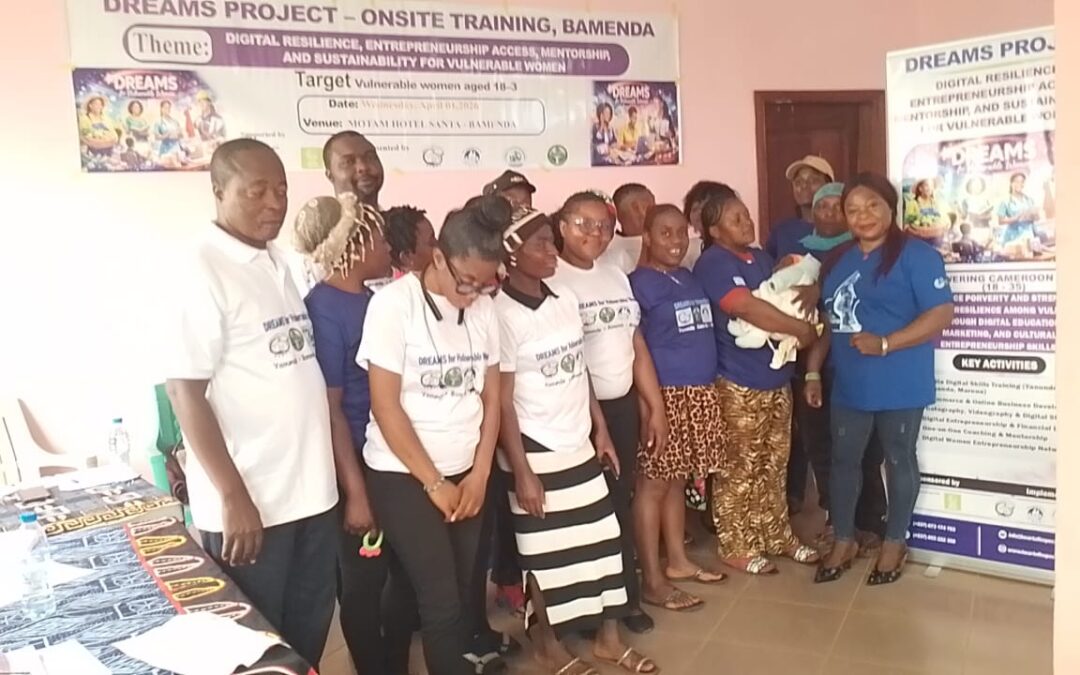
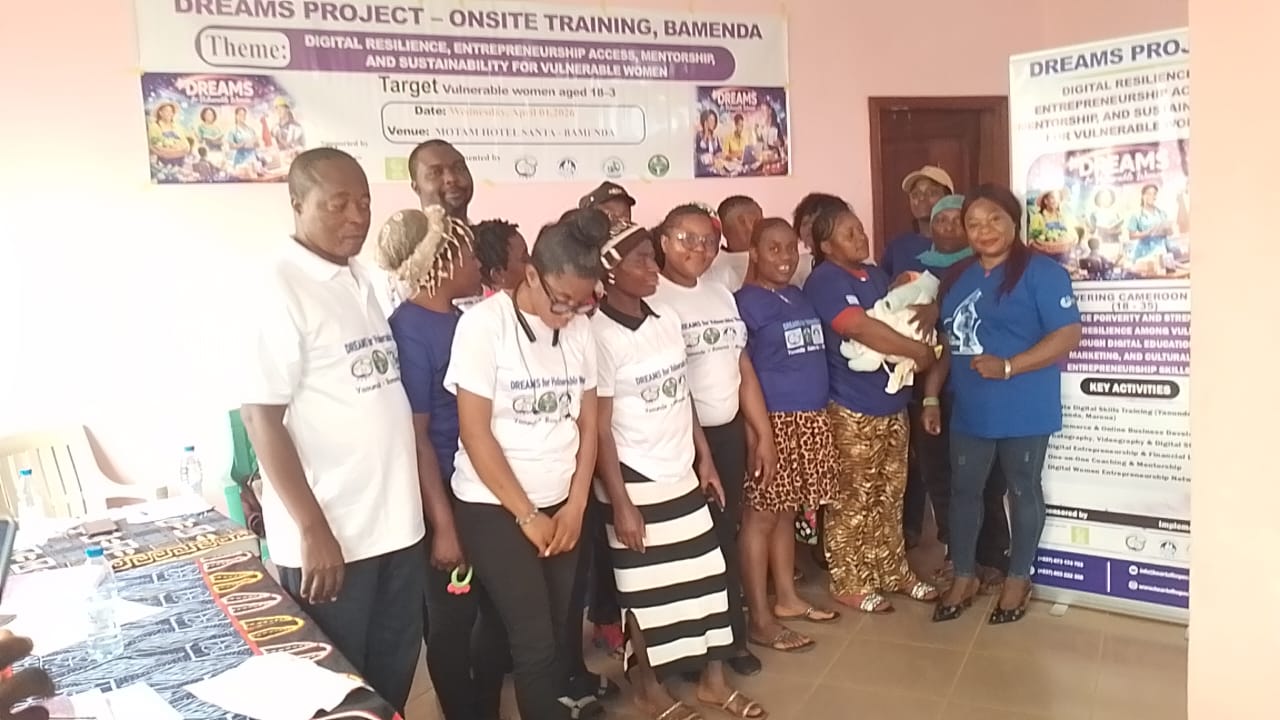
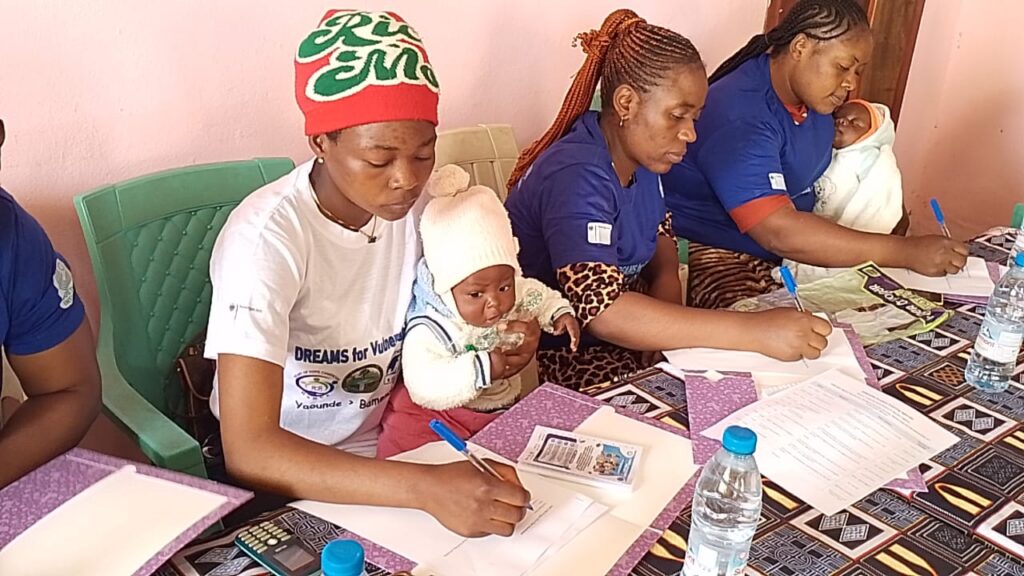
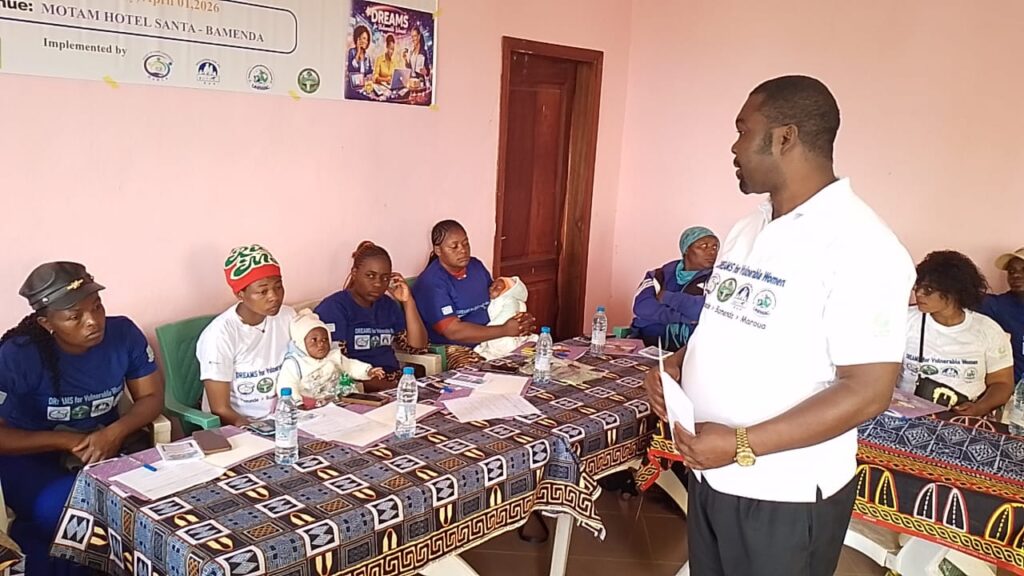
On April 1st, 2026, UNIMAC and its partners completed the second onsite delivery phase of the project in Santa, Bamenda — a location chosen for its proximity to a population of internally displaced and economically marginalised young women in the Northwest Region.
The four programme pillars
Digital literacy & resilience
Not tool familiarity — adaptive competence in a fast-shifting digital economy.
Entrepreneurship & business development
Real income pathways built on practical frameworks, not theoretical models.
Mentorship & leadership
Confidence is trained, not assumed. Peer structures that outlast the programme.
Sustainability & long-term thinking
Economic decisions framed around resilience, not immediate survival alone.
Not tool familiarity — adaptive competence in a fast-shifting digital economy.
The cohort comprised 60 young women between the ages of 18 and 35, drawn from three of Cameroon’s most economically and politically stressed regions: the Northwest, Centre, and Far North. The geographic breadth is deliberate — it tests whether a single methodology can serve meaningfully different displacement and poverty profiles.
Execution: a partnership model that held
One of the more common failure points in development programmes is the assumption that a single organisation can deliver everything. UNIMAC did not make that mistake. Implementation was coordinated across four organisations, each contributing a distinct capability set.
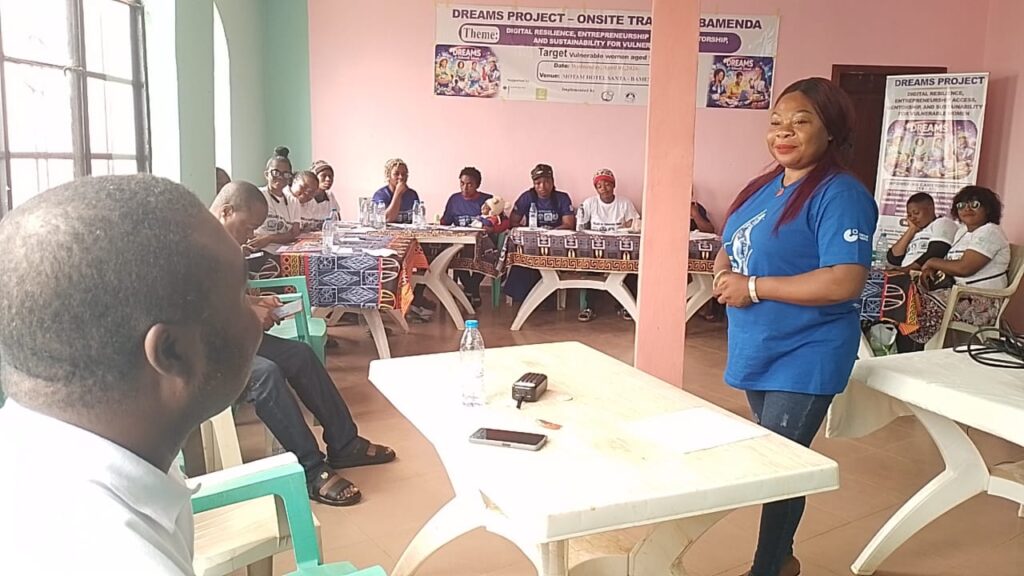
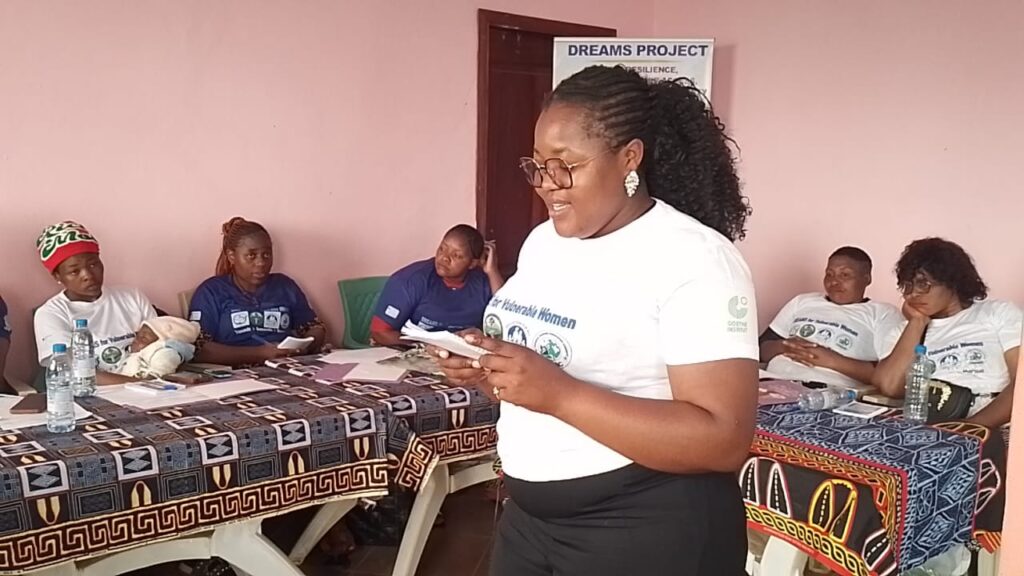
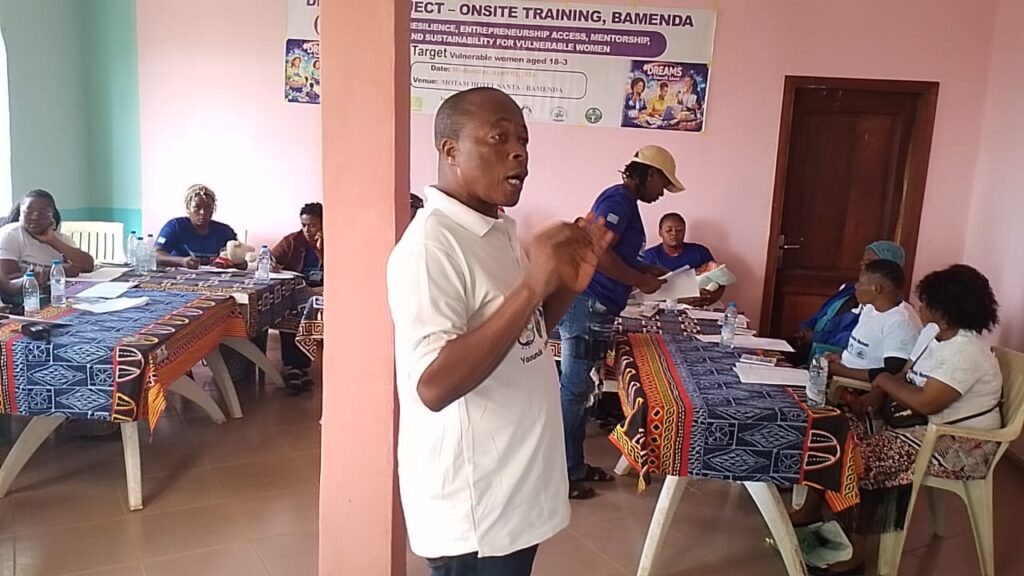
Funding was provided by the German Ministry of Foreign Affairs through the Goethe-Institut — a pairing that reflects a wider strategic reality: locally-rooted implementation anchored by international accountability structures tends to outperform both fully local and fully foreign-led programmes. The Goethe-Institut’s role introduced a layer of monitoring rigour that strengthened reporting and kept the project on verifiable timelines.
What participants gained
The outcomes documented across the cohort were behavioural and competency-based, not attitudinal. That distinction is important.
- Measurable improvement in digital competence across core productivity and communication tools
- Demonstrated entrepreneurial capability — including basic financial planning, value proposition design, and customer identification
- Improved confidence in leadership and public presentation contexts
- Stronger peer collaboration and problem-solving in group economic settings
These are not feel-good metrics. They are proxies for economic independence — indicators that a woman who completes this programme is more likely to generate income, more capable of navigating institutional barriers, and less dependent on aid structures to sustain herself and her household.
Why is this the right model to back
For prospective partners and funders, the strategic case is clear. The DREAM Project sits at the intersection of three UN Sustainable Development Goals with a robust international monitoring infrastructure behind them.
SDG 5 — Gender Equality
SDG 4 — Quality Education
SDG 8 — Decent Work & Economic Growth
But SDG alignment is a floor, not a ceiling. What makes the DREAM Project worth sustained investment is the underlying theory of change: systemic capability building is more durable than event-based programming. When a woman finishes this project, she does not carry a certificate — she carries operational knowledge and a network of peers she built it alongside.
If the goal is visibility, UNIMAC is not the organisation. If the goal is measurable social return at community scale, this is precisely the kind of infrastructure worth funding.
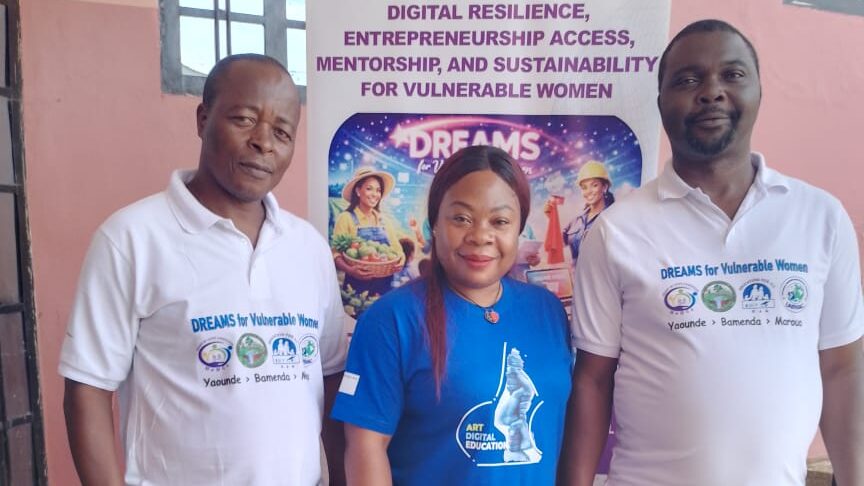
UNIMAC is not running events.
It is building economic actors — and that is what actually changes communities.
GET IN TOUCH