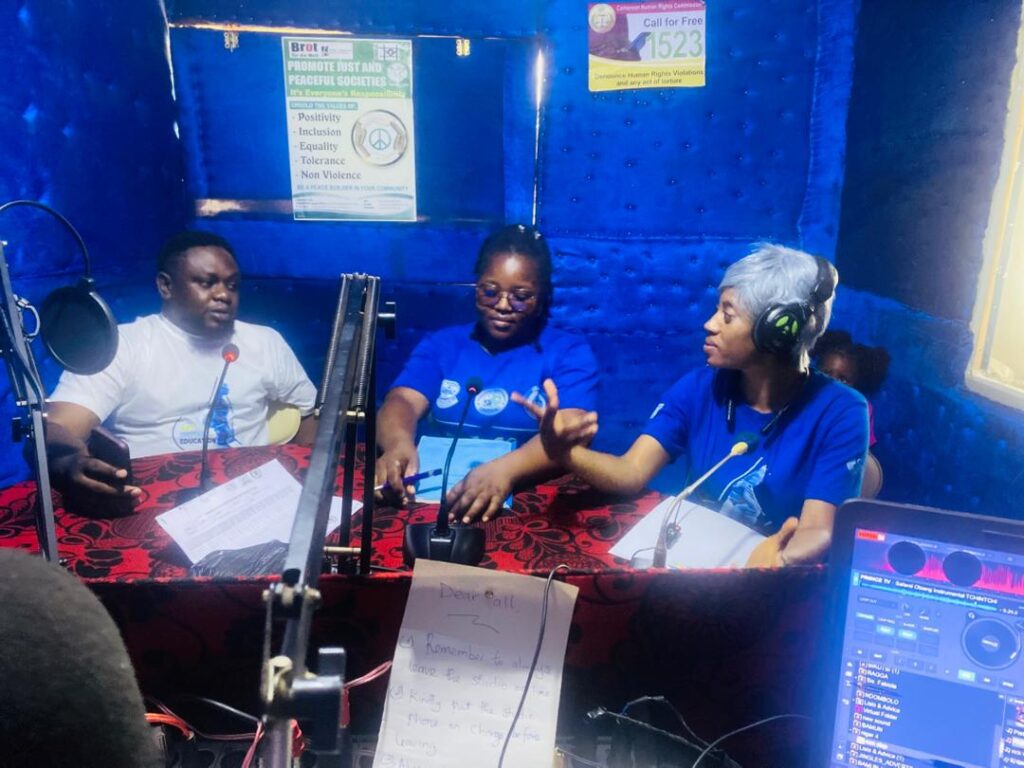
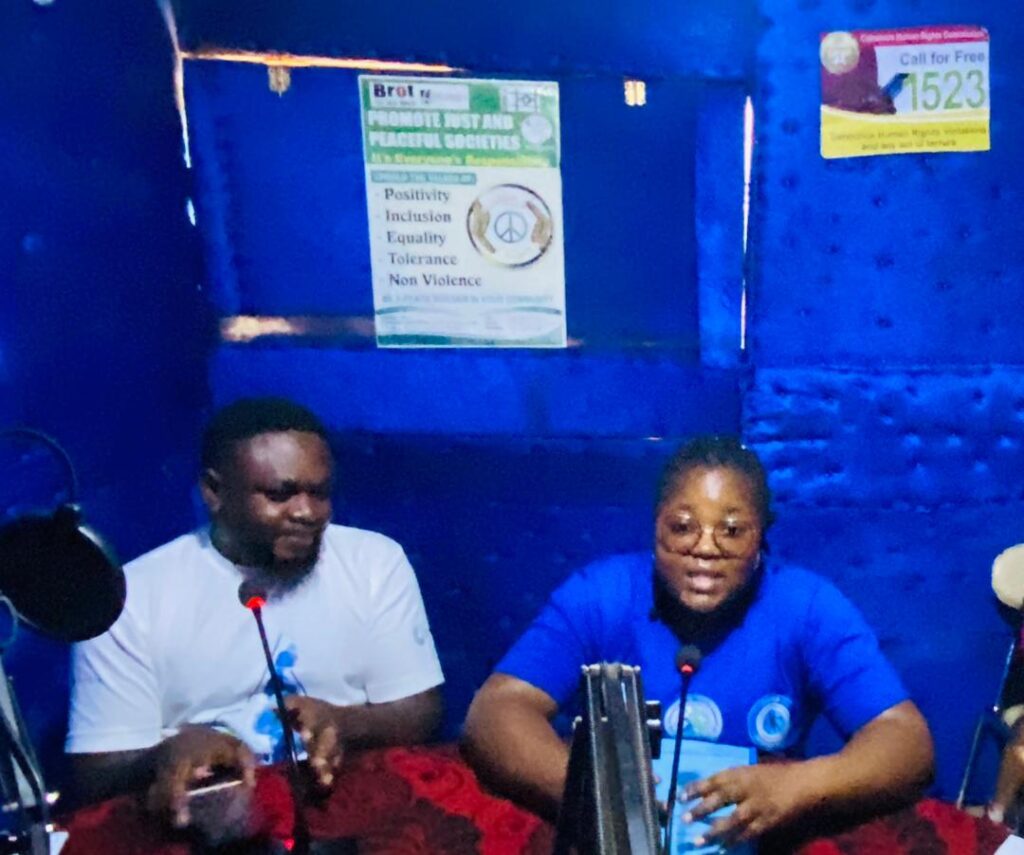
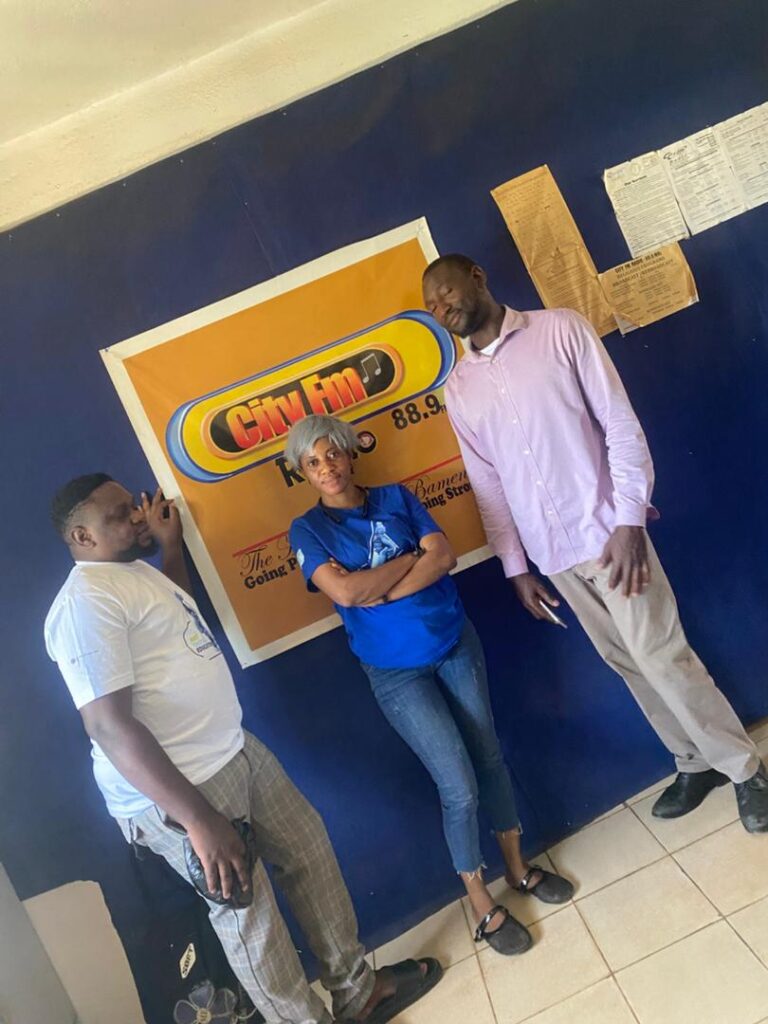
Most organisations confine their awareness campaigns to workshops and classrooms. But if the real ambition is to shift how communities think and behave, you have to meet people where they already are — in their homes, their workshops, the back of taxis, the kitchens of village houses. UNIMAC understands that. As part of its ongoing work on Cultural Diversity and Tolerance Education, the organisation took its message onto the airwaves of City FM Radio, reaching well beyond the walls of any school.
That choice matters more than it first appears.
Why radio still matters — and why most NGOs underestimate it
Many organisations have become so focused on social media metrics that they have quietly abandoned the medium with the longest reach into the communities they most need to influence. That is a strategic miscalculation. Across Cameroon — and across most of sub-Saharan Africa — radio remains one of the most trusted, most accessible, and most consistently consumed communication platforms available.
If the goal is genuine behaviour change rather than online engagement metrics, radio remains one of the most powerful tools available. UNIMAC leveraged that correctly — choosing the medium most likely to reach the audiences it actually needs to influence.
The objective beneath the topics
On the surface, the City FM Radio discussion covered familiar territory — cultural diversity, tolerance, peaceful coexistence, respect for different cultural identities, and the social cohesion of communities. But beneath those headings sits a far more uncomfortable question: how does any country build durable peace if its citizens are never deliberately taught how to respect difference?
“Cameroon’s social divisions continue to produce mistrust, discrimination, and fragmentation. You cannot build peaceful communities if people are never taught how to respect difference. That gap is exactly what this campaign addresses.
Preserving identity without manufacturing division
One of the most considered elements of the broadcast was its insistence on holding two messages in tension at the same time — the preservation of cultural identity and the practice of tolerance for the identities of others. That balance is difficult, and it is where most peace messaging quietly fails.
Conversations about unity that erase identity create resentment. Conversations about identity that ignore the wider community create division. UNIMAC’s broadcast did neither.
That is a notably more mature approach to peacebuilding than the messaging most awareness campaigns settle for. It treats listeners as capable of holding complexity — and it works precisely because of that respect.
The volunteers carrying the message
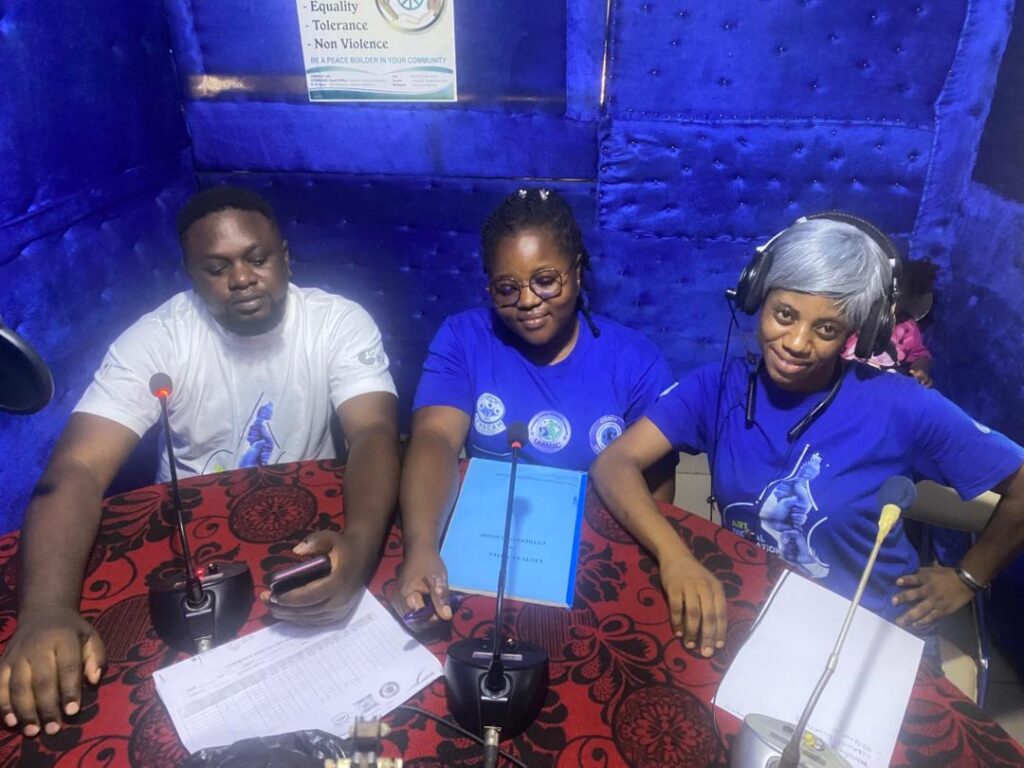
The City FM Radio sensitization was delivered by three UNIMAC volunteers who carried the broadcast and the conversation. This detail deserves attention, because sustainable community impact is almost never built by institutions alone. It is built by individuals willing, week after week, to carry a message into public space.
Volunteer-led outreach is often where genuine social trust begins. When a message comes from someone known to the community — not a distant institutional voice — it travels further, lands more deeply, and is more likely to be repeated in the conversations that follow.
Why this layered approach works
The City FM Radio broadcast did not stand alone. It is part of a deliberately layered strategy combining three reinforcing channels — each one reaching audiences the others miss, and each one carrying the same core message.
That layered structure is what separates a campaign that produces awareness from a campaign that produces behaviour change. Messages encountered in one channel are reinforced when they appear in another — in school, then on the radio at home, then in the community meeting next month. Repetition across contexts is what makes ideas stick.
The broadcast asked listeners to do four specific things in their daily lives:
- ▸Promote unity actively in everyday interactions — at the market, the workplace, the family meal
- ▸Reject discrimination and division openly when they appear in conversation
- ▸See cultural diversity as a strength to be drawn on, not a threat to be managed
- ▸Practise mutual respect across cultural lines, even — especially — when it is inconvenient
This is practical peace education — specific, actionable, addressed to ordinary people in their ordinary lives. Not abstract theory delivered from a distance.
Why partners and supporters should pay attention
Social cohesion work is consistently underfunded until it becomes urgent — until division has hardened into conflict and the cost of intervention has multiplied. This is backwards thinking. Preventive education around tolerance, identity, and coexistence is dramatically cheaper, and meaningfully more effective, than crisis response after division has matured.
Organisations willing to invest in long-term community harmony are building something far more valuable than short-term visibility — they are building social stability. UNIMAC is positioning itself precisely in that space, and the layered school-community-radio approach is the methodology that makes it possible.