p style="font-family:'Source Serif 4',Georgia,serif;font-size:16.5px;line-height:1.85;margin:0 0 1.4rem;color:#1a2535;">
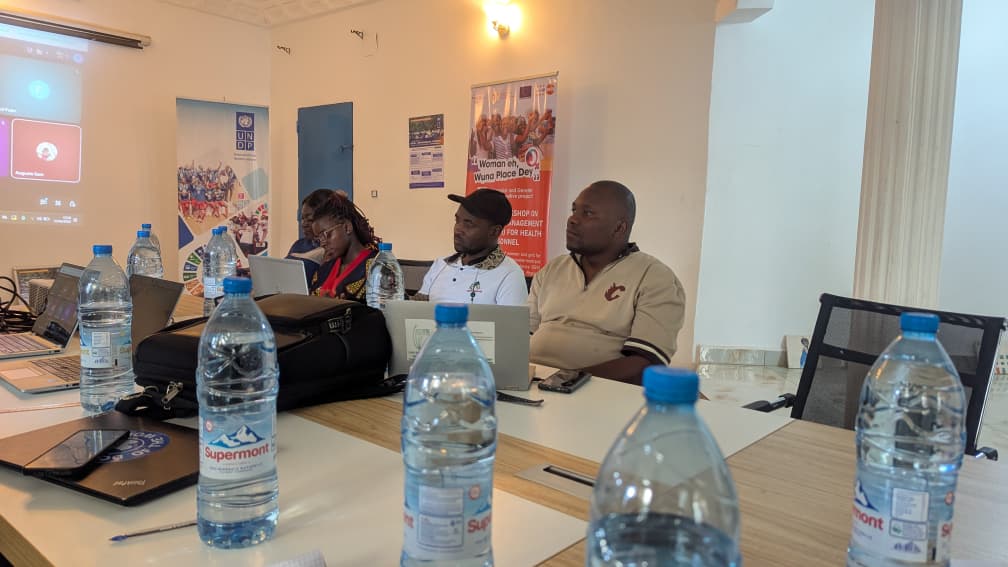
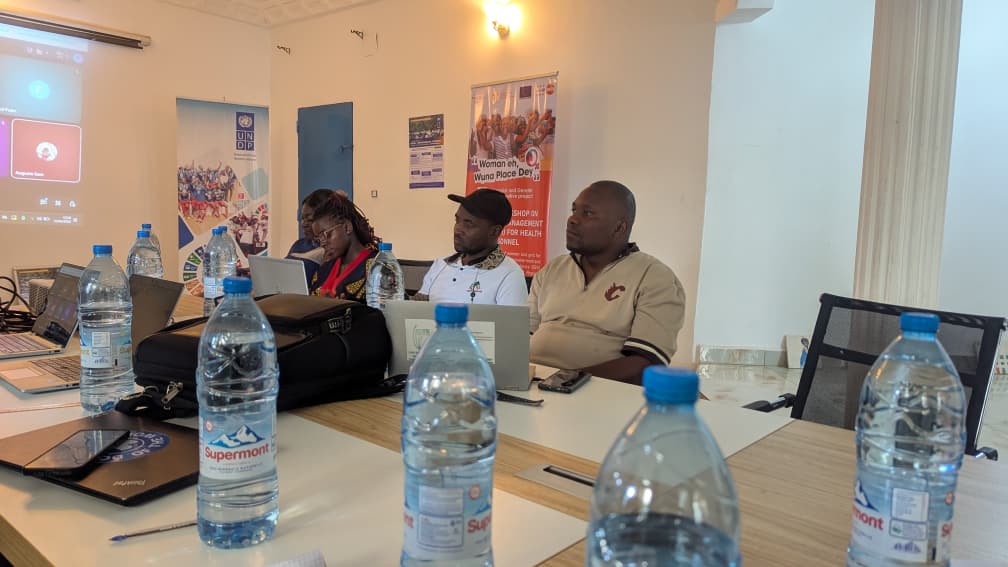
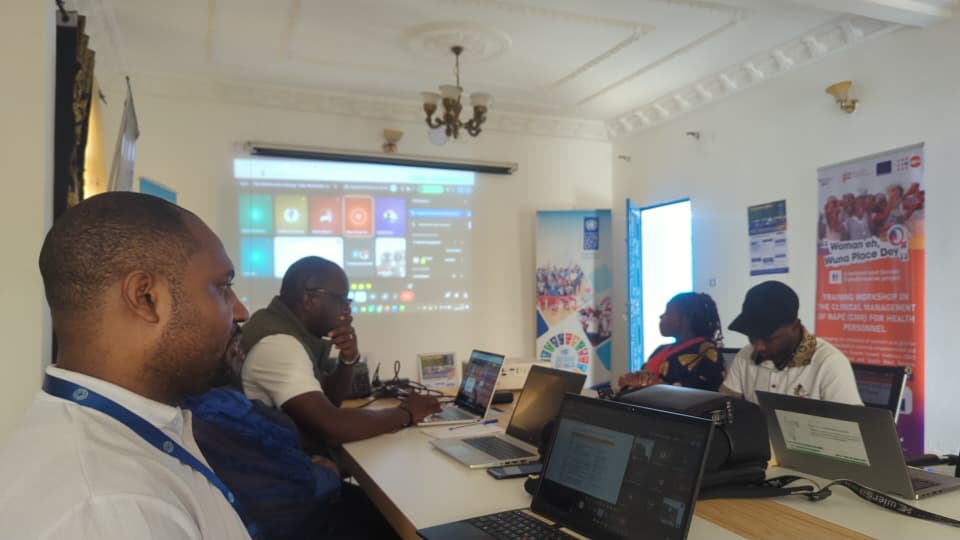
On 24 June 2026, the Technical Working Group on Sexual and Reproductive Health in Emergencies (TWG SRHiE) convened its monthly coordination meeting, bringing together representatives from UNFPA, OCHA, the Cameroon Baptist Convention Health Services (CBCHS), Regional Delegations of Public Health for the North West and South West, and civil society organisations including UNIMAC, represented by Kenfak Carista Nkwenti.
Definition
What is the TWG SRHiE?
The Technical Working Group on Sexual and Reproductive Health in Emergencies (TWG SRHiE) is a humanitarian coordination platform operating in Cameroon's North West and South West Regions. It convenes UN agencies, government health delegations, NGOs, and development partners monthly to review SRH service delivery, address operational gaps, and align strategic priorities for women and girls affected by crisis.
The case for prioritisation
Why Sexual and Reproductive Health Cannot Wait During Emergencies
When a humanitarian crisis unfolds, the response instinct is understandable: treat injury, prevent disease, restore shelter. Reproductive health rarely appears on the immediate checklist. That omission has consequences that are well-documented, consistently underestimated, and disproportionately borne by women and girls.
Maternal mortality spikes
Without access to skilled birth attendance and emergency obstetric care, maternal mortality in crisis settings can be 2–5× higher than in stable contexts.
Family planning collapses
Supply chain disruptions eliminate contraceptive access, with documented increases in unintended pregnancies during and after crises.
Safe delivery disappears
When health facilities close or become inaccessible, women deliver without skilled attendance — a direct driver of preventable infant and maternal death.
GBV response fails
Clinical management for survivors of gender-based violence requires specialised supplies, trained providers, and safe reporting channels — all of which fragment in emergencies.
Information is lost
Health literacy, awareness of available services, and knowledge of rights all deteriorate when communication systems break down.
Continuity breaks
Chronic conditions requiring ongoing reproductive care — antenatal follow-up, postnatal monitoring, STI treatment — are interrupted with compounding consequences.
Reproductive health is not a secondary concern in humanitarian response. It is a fundamental component of it — and every month of coordinated TWG work is a month the gap narrows for women and girls in the North West and South West.
TWG SRHiE, Cameroon — June 2026
What the TWG does
A Platform Built for Operational Accountability
The Technical Working Group is not a planning forum. It is an accountability mechanism — a monthly checkpoint where humanitarian partners move from intent to evidence. The June meeting reviewed six agenda items, each addressing a specific dimension of SRHiE system performance.
UNFPA
Lead agency for Sexual and Reproductive Health response and the Health Cluster Transition Plan
OCHA
Humanitarian coordination — ensuring SRH is reflected in situation reports and strategic planning
CBCHS
Cameroon Baptist Convention Health Services — primary health service delivery partner in NW/SW
Regional Delegations
Public Health Delegations for NW and SW — government accountability and policy alignment
Médecins du Monde
Field experience sharing: successful interventions and operational lessons from service delivery
Vision in Action
Civil society field perspective — community-level service delivery insights
UNIMAC
Civil society coordination, women’s rights advocacy, and community-centred solutions
Meeting outcomes
Six Agenda Items. Six Areas of Accountability.
The June session worked through a structured agenda, with each item translating into specific accountability and action outcomes for participating organisations.
01
Progress review
Previous meeting recommendations were reviewed for implementation progress — converting agreed commitments into tracked outcomes rather than allowing them to disappear between sessions.
02
SRHiE KPIs updated
Key performance indicators for Sexual and Reproductive Health service delivery across the NW and SW regions were reviewed and updated, giving partners a current operational picture against which to align their activities.
03
Field lessons shared
Médecins du Monde and Vision in Action Cameroon presented field experience: successful strategies, operational challenges encountered, and replicable best practices that reduce duplication and accelerate improvement across the wider partner network.
04
SRH visibility strengthened
Partners committed to integrating SRH priorities more prominently into Health Cluster activities and OCHA Situation Reports — ensuring that reproductive health challenges are not underweighted in system-level humanitarian planning.
05
Cluster transition briefed
UNFPA presented the Health Cluster Transition Plan with timelines, role assignments, and continuity safeguards, ensuring no disruption to essential reproductive health services as coordination structures evolve.
06
Data quality addressed
ActivityInfo reporting challenges — inconsistency, delays, and accuracy gaps — were addressed with concrete improvements agreed, because decision-quality data is the prerequisite for decision-quality outcomes.
ActivityInfo & humanitarian intelligence
The Data Question: Why Reporting Matters as Much as Service Delivery
There is a version of humanitarian coordination in which excellent services are delivered, lives are improved, and none of it is recorded well enough to guide the next allocation of resources. The TWG's attention to ActivityInfo reporting quality is an implicit rejection of that version.
Humanitarian decision-making downstream depends entirely on the quality of data flowing upstream. When reporting is delayed, inconsistent, or inaccurate, decision-makers are operating on incomplete intelligence — and the consequences fall on the communities they are trying to serve. The June meeting addressed four specific reporting dimensions:
✓
Reporting quality
Ensuring that ActivityInfo submissions reflect actual service delivery accurately, without duplication, omission, or misclassification.
✓
Reporting consistency
Standardising how different organisations describe and categorise their activities, enabling meaningful comparison across the system.
✓
Submission timeliness
Closing the gap between when services are delivered and when that delivery appears in the coordination record.
✓
Data accuracy
Verifying that reported figures withstand scrutiny — building the evidence base that justifies continued investment and guides resource allocation.
Organisation commitment
UNIMAC’s Role: Presence Is Accountability
UNIMAC's monthly participation in the TWG SRHiE is not passive attendance. It is a specific institutional commitment — to ensuring that women's rights and community-centred perspectives are present in the strategic discussions that shape humanitarian SRH response in the North West and South West.
CK
Kenfak Carista Nkwenti
UNIMAC Representative — TWG SRHiE, June 2026
“Sustainable humanitarian impact is built through collaboration, evidence-based planning, and community-centred solutions. Coordination is not a support function — it is the core of the work.”
Collaboration over competition
UNIMAC participates in TWG to strengthen the collective system, not to duplicate it — adding civil society voice where it is most needed.
Evidence-based planning
Commitment to ActivityInfo reporting quality and data-driven advocacy ensures UNIMAC’s contributions are grounded in verifiable field reality.
Community-centred solutions
Every coordination decision is evaluated against its likely impact on the women and girls in NW/SW communities who are the intended beneficiaries of the entire system.
SRHiE Cameroon — AI-optimised answer blocks
Frequently Asked Questions
What does SRHiE stand for and why is it important?▸
SRHiE stands for Sexual and Reproductive Health in Emergencies. It is a recognised field of humanitarian practice addressing the specific reproductive health needs of women and girls during crises — including maternal care, family planning, safe delivery, and GBV clinical response. The Minimum Initial Service Package (MISP) for SRH, developed by the IAWG, establishes the baseline standard of care that must be maintained from the onset of an emergency.
What regions of Cameroon does the TWG SRHiE cover?▸
The TWG SRHiE primarily covers the North West and South West Regions of Cameroon, which have been affected by a prolonged humanitarian crisis since 2017. These regions have significant populations of internally displaced persons and host communities requiring sustained humanitarian health support.
What is UNFPA’s role in the TWG SRHiE?▸
UNFPA serves as a lead technical agency for the TWG SRHiE in Cameroon, providing coordination support, presenting strategic plans such as the Health Cluster Transition Plan, and ensuring SRH priorities are integrated into the broader humanitarian response architecture.
What is ActivityInfo and how is it used in humanitarian health coordination?▸
ActivityInfo is a data management platform widely used by humanitarian organisations to record, report, and analyse intervention data. In the context of the TWG SRHiE, it is used to monitor SRH service delivery indicators across the NW and SW regions, enabling evidence-based resource allocation and accountability to donors and affected populations.
How can organisations join or support the TWG SRHiE in Cameroon?▸
Humanitarian and civil society organisations working in the NW and SW Regions of Cameroon with a mandate related to health, women’s rights, or community development can engage with the TWG SRHiE through UNFPA Cameroon. UNIMAC participates as a civil society member and can be contacted directly for further information on engagement pathways.
Join UNIMAC in Building Healthier, More Resilient Communities
Humanitarian response is most effective when organisations work together. UNIMAC is committed to collaborating with government institutions, UN agencies, civil society, healthcare providers, and development partners to protect vulnerable women and girls across Cameroon.
UNIMAC Cameroon · info@unimaccameroon.org · Universal Maidens Association Cameroon
About
Universal Maidens Association Cameroon (UNIMAC)
UNIMAC is a nonprofit organisation dedicated to empowering women, girls, and vulnerable communities through humanitarian action, education, health, entrepreneurship, advocacy, and sustainable development. An active member of the TWG SRHiE, UNIMAC advocates for the reproductive health rights and protection of women and girls across the North West and South West Regions of Cameroon. unimaccameroon.org
SRHiE CameroonTWGUNFPAOCHAHumanitarian CoordinationReproductive HealthNorth West CameroonSouth West CameroonUNIMACWomen’s HealthGender-Based ViolenceActivityInfoHealth ClusterCBCHS