Most schools measure success by exam results. But young people are not shaped by textbooks alone. They are shaped by exposure, interaction, and the quiet environments that teach them how to live alongside people who are not like them. That second curriculum — the social one — rarely appears on any report card. It is, however, the curriculum that determines whether a generation builds bridges or walls.
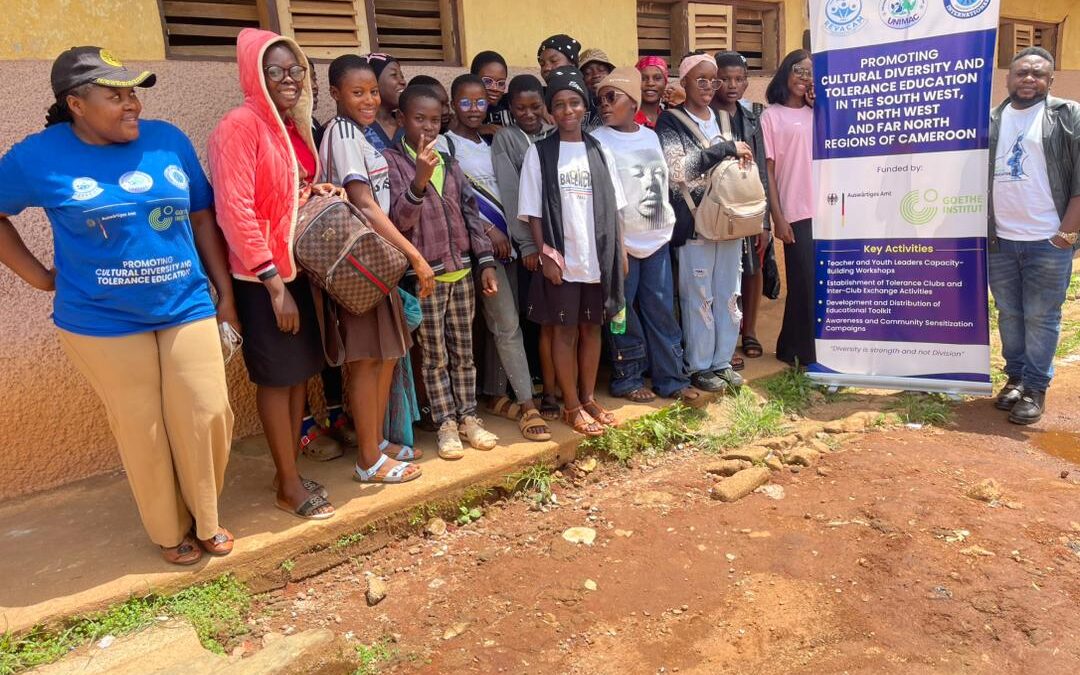
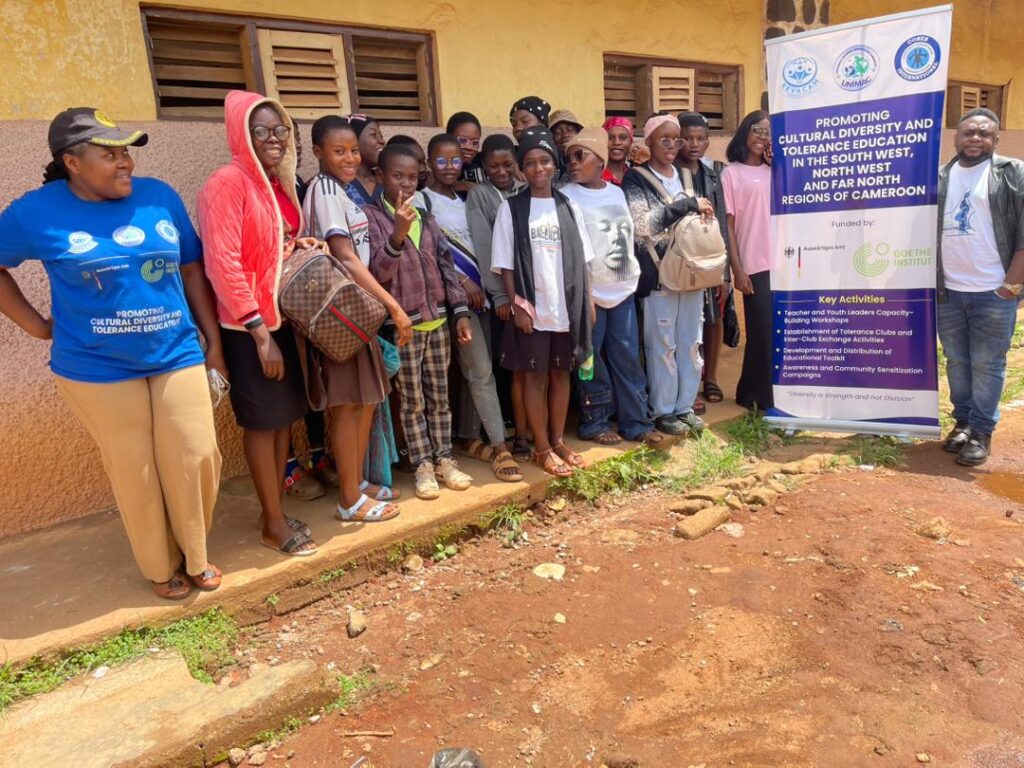
On 28 May 2026, UNIMAC turned that second curriculum into a structured event. As part of the Connected Cameroon Project — “Promoting Cultural Diversity and Tolerance Education in the South West, North West and Far North Regions of Cameroon” — an Inter-School Cultural Club Exchange brought students from Blessed Bilingual Secondary School and City College of Commerce (CCC) Mankon together under one theme:
That theme reads like a sentence from a policy paper. The day itself was not. It was performance, laughter, debate, and the kind of teenage curiosity that happens when young people from different cultural backgrounds spend an afternoon trying to understand each other. The framing on the page was social cohesion training. The framing in the room was a celebration. Both are accurate, and the gap between them is precisely what makes this kind of work effective.
The structural caseWhy cultural exchange matters more than ever
Cameroon’s diversity is genuinely one of its greatest national strengths. It is also, when left unmanaged, one of its quietest vulnerabilities — because diversity without exposure becomes a stranger’s problem rather than a neighbour’s opportunity.
Too many young people grow up surrounded only by people who think, speak, eat, worship, and live the way they do. That homogeneity, however comfortable, is the soil in which stereotypes germinate. The fewer authentic encounters a young person has with people unlike themselves, the more easily their imagination fills the gap with assumptions. Multiply that pattern across a generation, and social fragmentation becomes inevitable.
Programs like the Inter-School Cultural Club Exchange directly interrupt that cycle. Instead of teaching tolerance as abstract theory in a lecture, UNIMAC and its facilitators built an environment where students could experience cultural diversity firsthand — on a stage, in a debate, around a game. That difference matters. Information about other cultures shifts opinions slightly. Direct, positive experience of other cultures rewires assumptions.
What actually happenedTurning culture into connection
The exchange was deliberately built around interactive formats. None of it was passive. Students arrived as guests of their own culture and left as participants in someone else’s.
On the surface, this looks like a school open day. Beneath that surface, every activity was designed to produce one of four outcomes — respect, curiosity, teamwork, or intercultural understanding. The recreational frame was the strategy, not the limitation.
Leadership behind the workThe facilitators who turned an event into impact
Youth engagement without direction tends to produce entertainment but not impact. The difference between the two is facilitation — and the exchange was guided by three UNIMAC facilitators who carried the discussion deliberately toward the themes that mattered.
They guided structured conversation across four themes that anchor the work UNIMAC is doing across all three target regions:
Their role was the quiet architecture of the day — transforming what could have been a pleasant school activity into a structured conversation about unity and social responsibility. That is what good facilitation does: it makes the deeper work invisible inside the visible joy.
The outcomes that matterMore than entertainment — building future community leaders
Throughout the exchange, students demonstrated four behaviours that are themselves the seeds of every functional multicultural community.
Participants left expressing a deeper appreciation for cultural diversity and peaceful coexistence. That outcome is significant because attitudes formed in adolescence are remarkably durable. If young people learn instinctive respect for difference at fifteen, they enter adulthood already carrying the social posture that makes communities harder to fracture at fifty.
The bigger pictureWhy this matters for Cameroon’s future
Peacebuilding tends to be discussed at political and institutional levels — in summits, mediation tables, signed agreements. Those venues matter. But sustainable peace begins much earlier than any signing ceremony. It begins inside classrooms, in casual conversations between students, in the friendships that form across cultural lines before adolescence hardens into adulthood.
The Inter-School Cultural Club Exchange contributed directly to four outcomes that compound over time:
- ▸ Intercultural dialogue. Sustained conversation across cultural difference at the level of everyday student interaction.
- ▸ Stronger inter-school relationships. Institutional ties between schools that will outlast any single cohort of students.
- ▸ Awareness of tolerance and diversity. Increased understanding that diversity is a resource rather than a threat.
- ▸ Community cohesion via youth. Social capital built early, paying dividends across the lifecycle of the participating young people.
And critically, this model is scalable. The components are inexpensive, the methodology is repeatable, and the impact compounds in proportion to how many schools and regions are reached. What worked in Bamenda on 28 May can work in Buea, Maroua, and across the country.
The investment caseWhy partners and supporters should pay attention
Most humanitarian and development funding is deployed reactively — after conflict has erupted, after division has crystallised, after the cost of repair has multiplied. The economics of that pattern are well documented. So is the moral cost.
Organisations supporting youth-focused cultural education are not funding a temporary event. They are funding long-term social stability, inclusive communities, the development of future youth leadership, and a model of sustainable peacebuilding that scales. UNIMAC is deliberately positioning itself in that strategic space — the space where the smartest funders are increasingly choosing to invest.
Frequently askedCommon questions about the Connected Cameroon Project
What is the Connected Cameroon Project?
The Connected Cameroon Project is a multi-region initiative promoting cultural diversity and tolerance education across the South West, North West, and Far North Regions of Cameroon. It uses school-based exchanges, community engagement, and media outreach to build social cohesion.
What is an Inter-School Cultural Club Exchange?
An Inter-School Cultural Club Exchange brings together students from different schools to participate in shared cultural activities — traditional dance, storytelling, drama, debate, and games — designed to build mutual respect, intercultural understanding, and peaceful coexistence.
Which schools participated in the 28 May 2026 exchange?
Students from Blessed Bilingual Secondary School and City College of Commerce (CCC) Mankon participated in the Inter-School Cultural Club Exchange, held at CCC Mankon in Bamenda, North West Region.
Why is youth-led cultural exchange important for peacebuilding?
Attitudes formed in adolescence are durable. Cultural exchange in school settings builds instinctive respect for difference at the age when social attitudes are most plastic — making preventive peacebuilding significantly more cost-effective than post-conflict reconstruction.