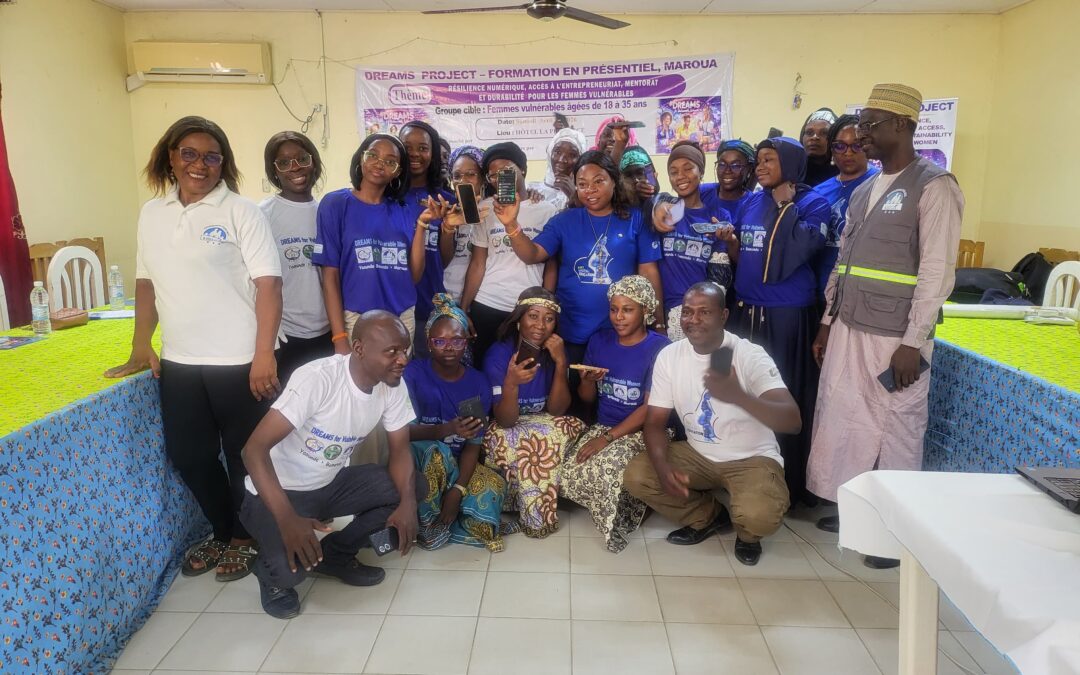
Inside a single day of structured training that delivered digital literacy, entrepreneurship foundations, and a mentorship pipeline to twenty women in one of Cameroon's most underserved regions — and what it will take to make it permanent.
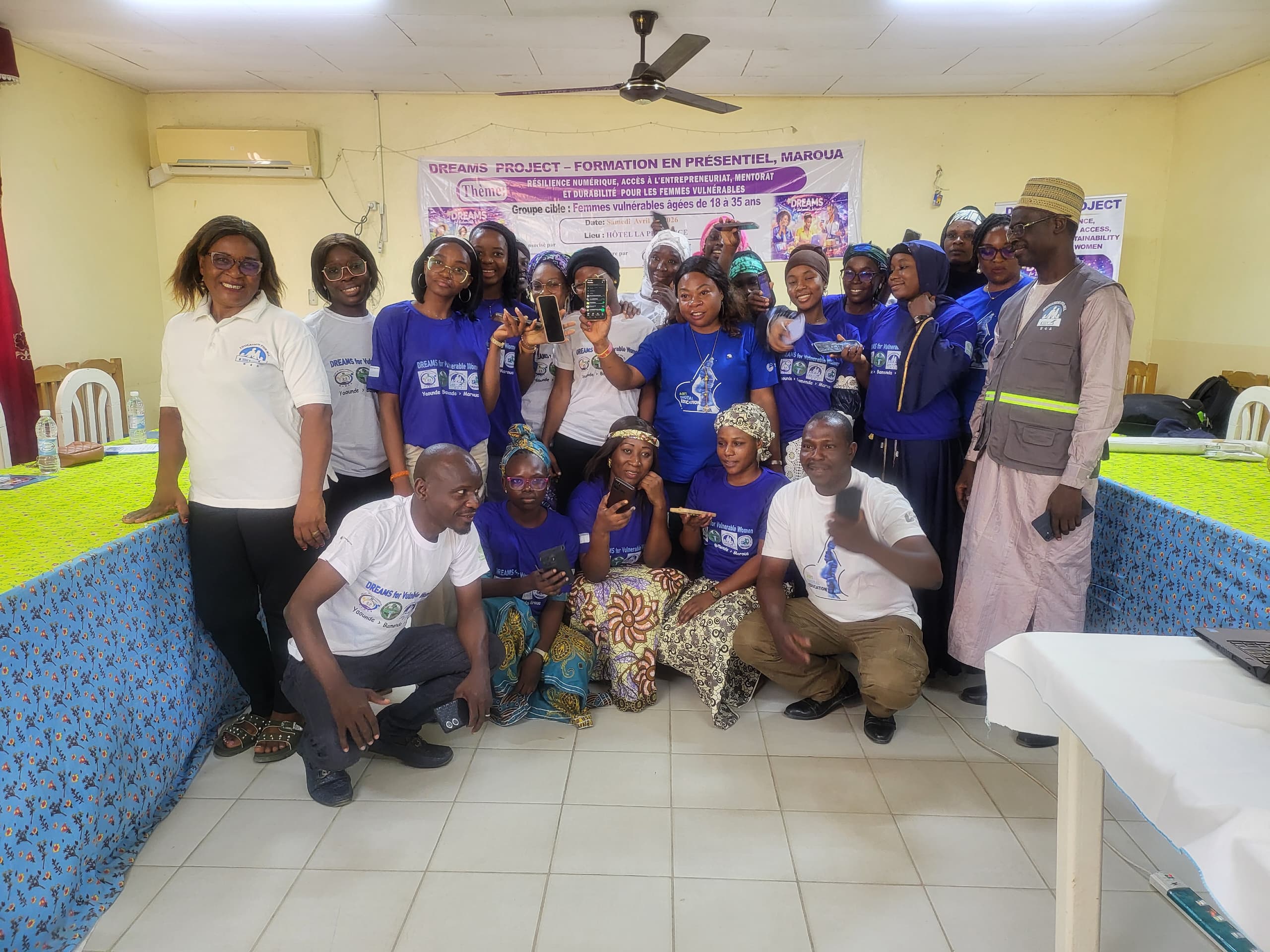
18 April 2026
Maroua
Far North Region, Cameroon
UNIMAC
Heart of Hope Cameroon · Education For All ·
FAPNGO
German Ministry of Foreign Affairs Goethe-Institut
Digital exclusion and economic marginalisation compound each other. A woman without internet access cannot reach the markets, information, or networks that would allow her to build income. A woman without income cannot acquire devices or connectivity. The DREAM Project was designed to break that cycle — and on 18 April 2026, it did so for twenty women in Maroua who had been locked inside it long enough.
The problem this project is built to solve
The Far North Region of Cameroon sits at the intersection of three compounding pressures: the humanitarian fallout of the Lake Chad Basin crisis, which has produced significant displacement and economic disruption; a persistent gender gap in access to digital infrastructure; and limited institutional reach for women's economic development programming. These are not independent problems — they reinforce each other in ways that make each one harder to address in isolation.
The DREAM Project — Digital Resilience, Entrepreneurship Access, Mentorship, and Sustainability — was conceived as a direct response to this compound challenge. Its design reflects a specific theory of change: that vulnerable women in marginalised Cameroonian regions are not lacking in motivation or capability, but in the structured access to tools, knowledge, and networks that converts existing potential into sustainable livelihood.
Digital exclusion is not a technology problem. It is a development problem — and solving it requires the same structured, community-embedded approach as any other form of economic exclusion.
Project overview
The Maroua session sits within a broader seven-month initiative spanning three of Cameroon's most economically and socially pressured regions.
Duration March – September 2026 (7 months)
Total cohort 60 women, aged 18–35
Regions Centre · Northwest · Far North
Funder German MFA via Goethe-Institut
March–Sept 2026
Participants for the Maroua session were selected specifically on the basis of vulnerability — women most in need of support within the community, aged between 18 and 35. That selection criterion is not incidental. It signals that the programme is not designed to serve the easiest-to-reach participants and count the numbers. It is designed to reach those for whom the structural barriers are highest, and deliver a measurable intervention precisely where the need is greatest.
Inside the Maroua session: five structured phases
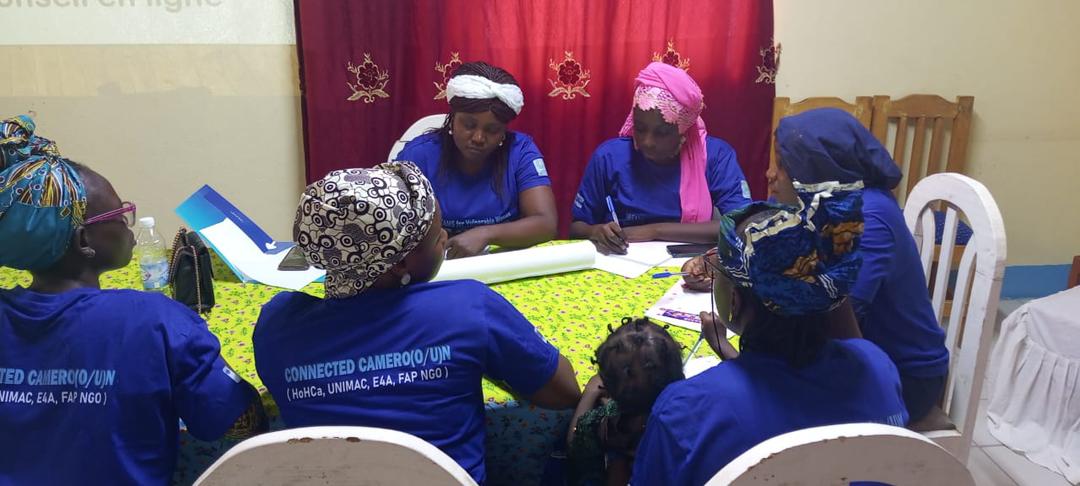
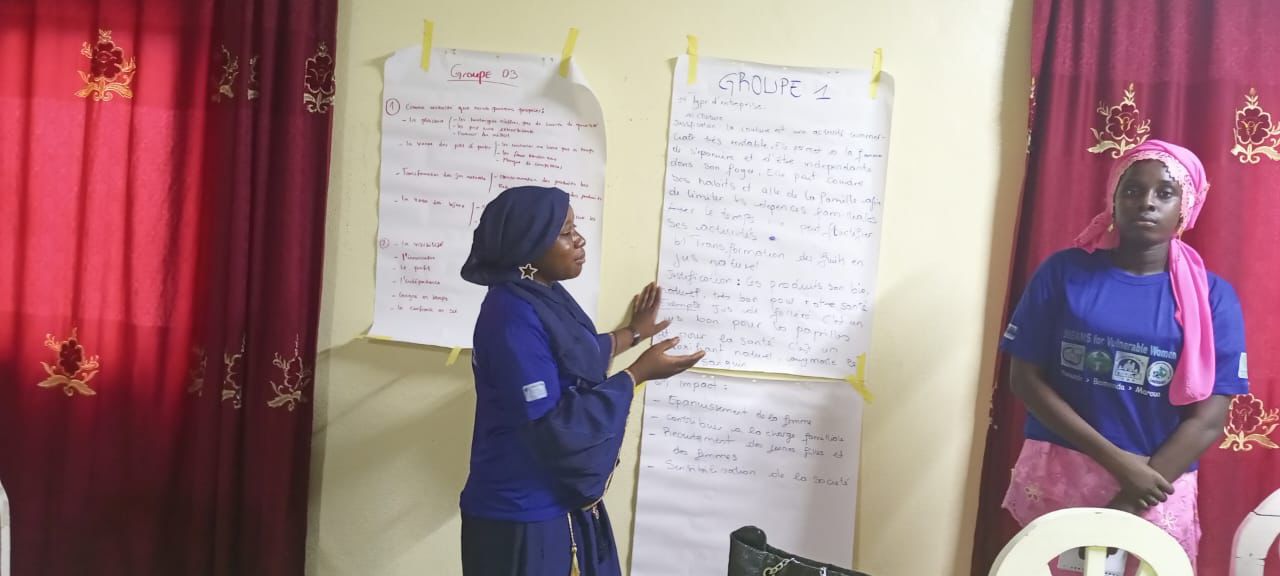
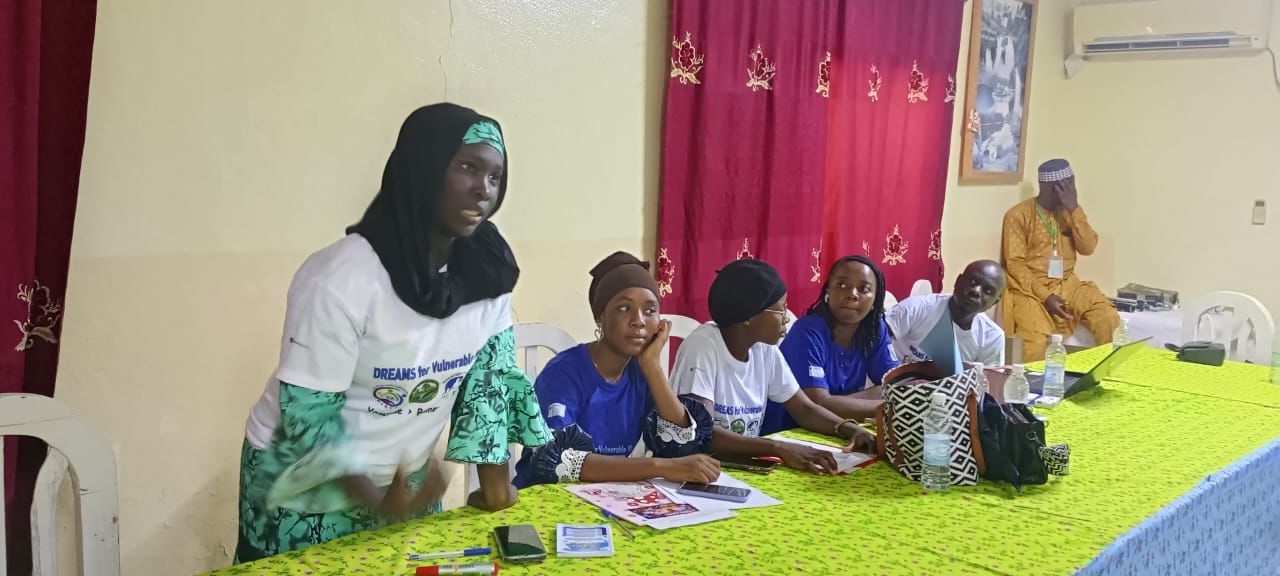
The workshop did not operate as a general awareness event. It moved through five purposefully sequenced components, each building on the last — designed so that participants arrived at the mentorship introduction having already absorbed both the digital and entrepreneurship content that will frame their mentoring conversations going forward.
1. Project orientation
2. Digital literacy training
3. Entrepreneurship foundations
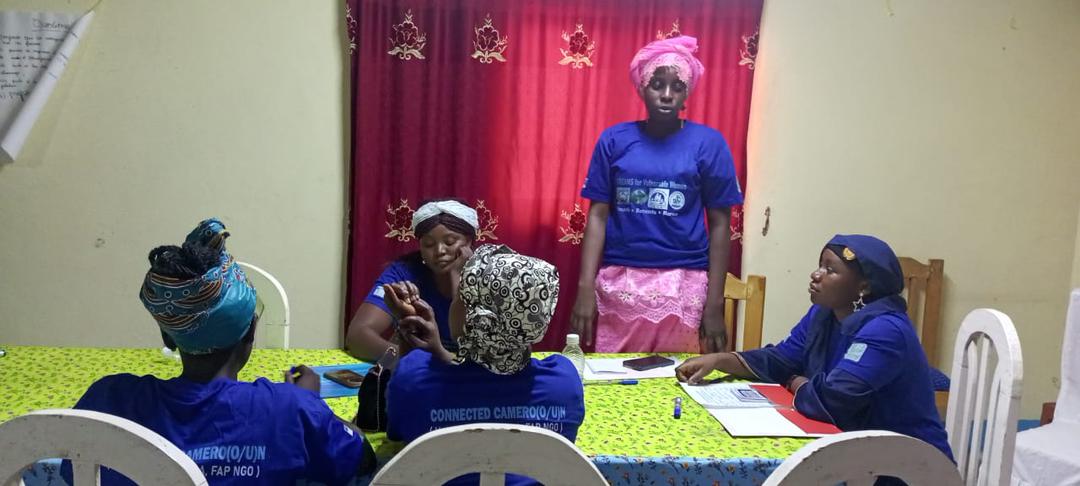
4. Group work and experience-sharing
5. Mentorship introduction
The sequencing is pedagogically intentional. By anchoring the session in digital and entrepreneurship knowledge before introducing mentorship, the programme ensures that participants enter their mentoring relationships with a shared vocabulary and a concrete skills base to build on — rather than arriving as blank slates dependent on the mentor to define the agenda.
The implementing consortium
Joint delivery of this kind requires more than formal partnership agreements. It requires genuine operational coordination — each organisation contributing a capability the others do not have, rather than duplicating the same functions under different logos.
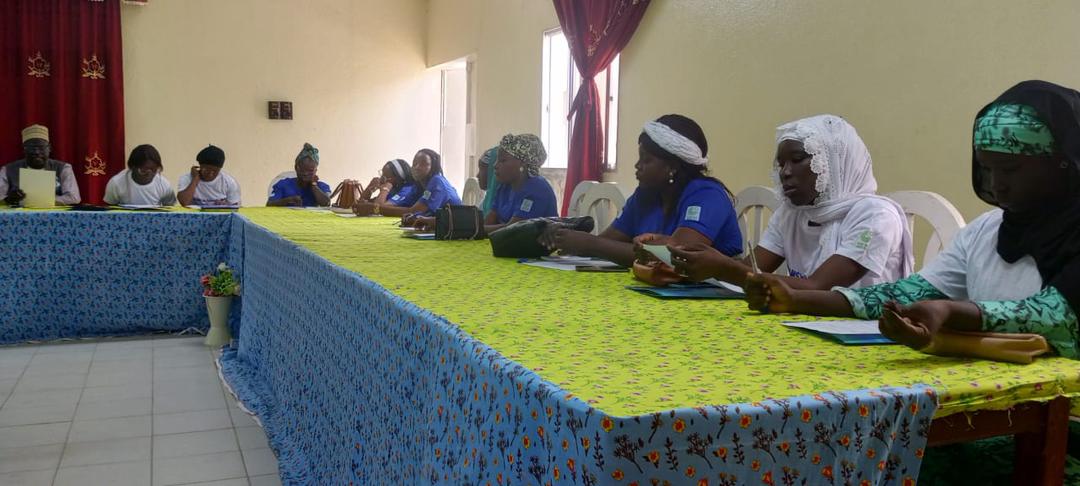
Dreams Participants taking notes 2
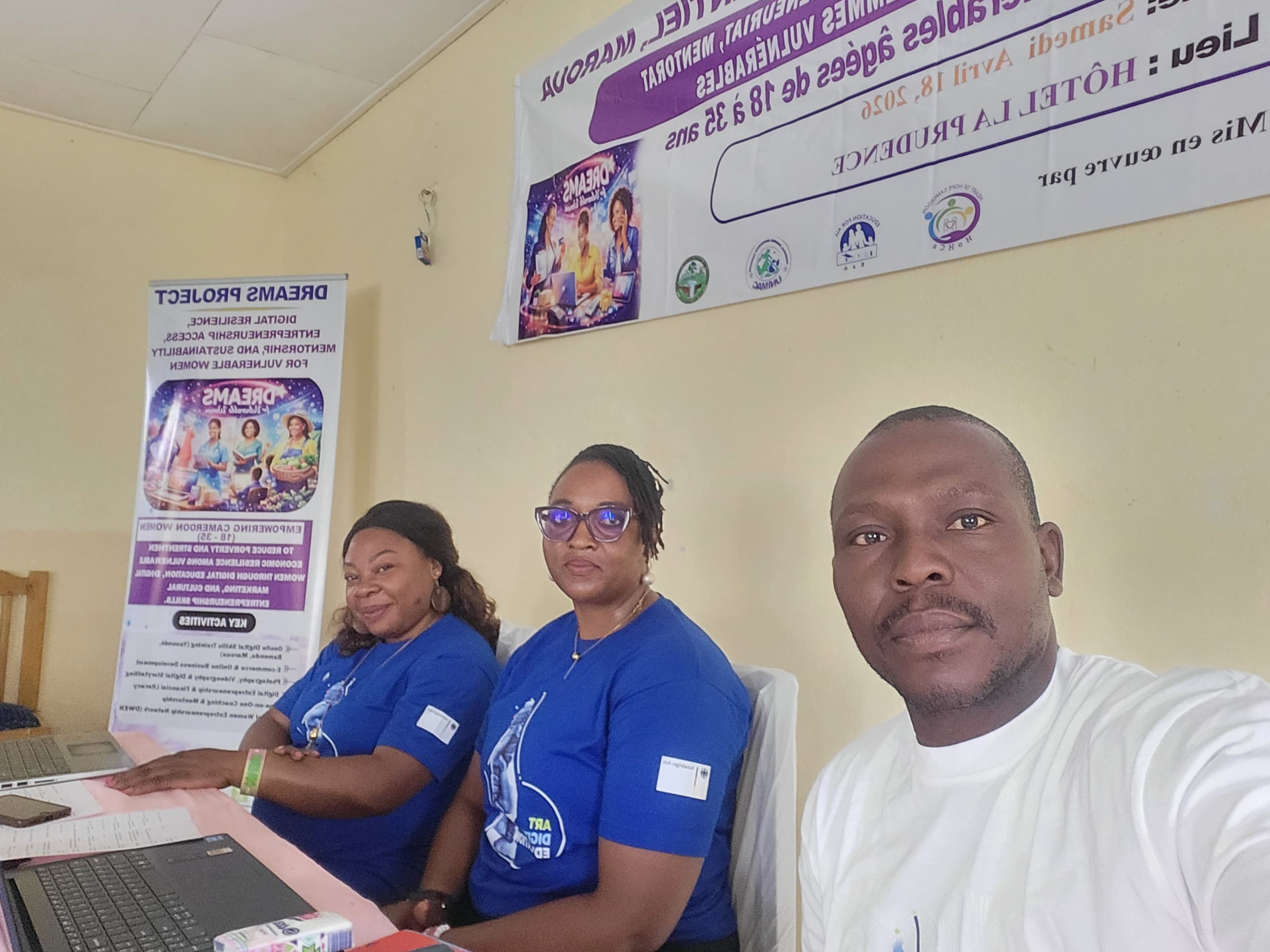
Dreams Maroua Facilitators
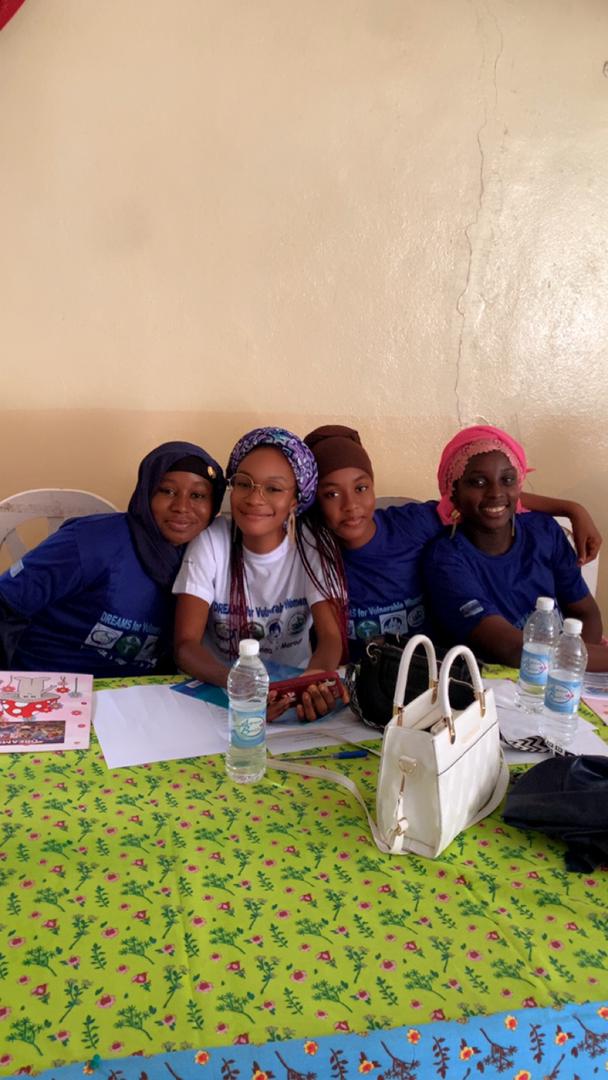
Dreams group picture
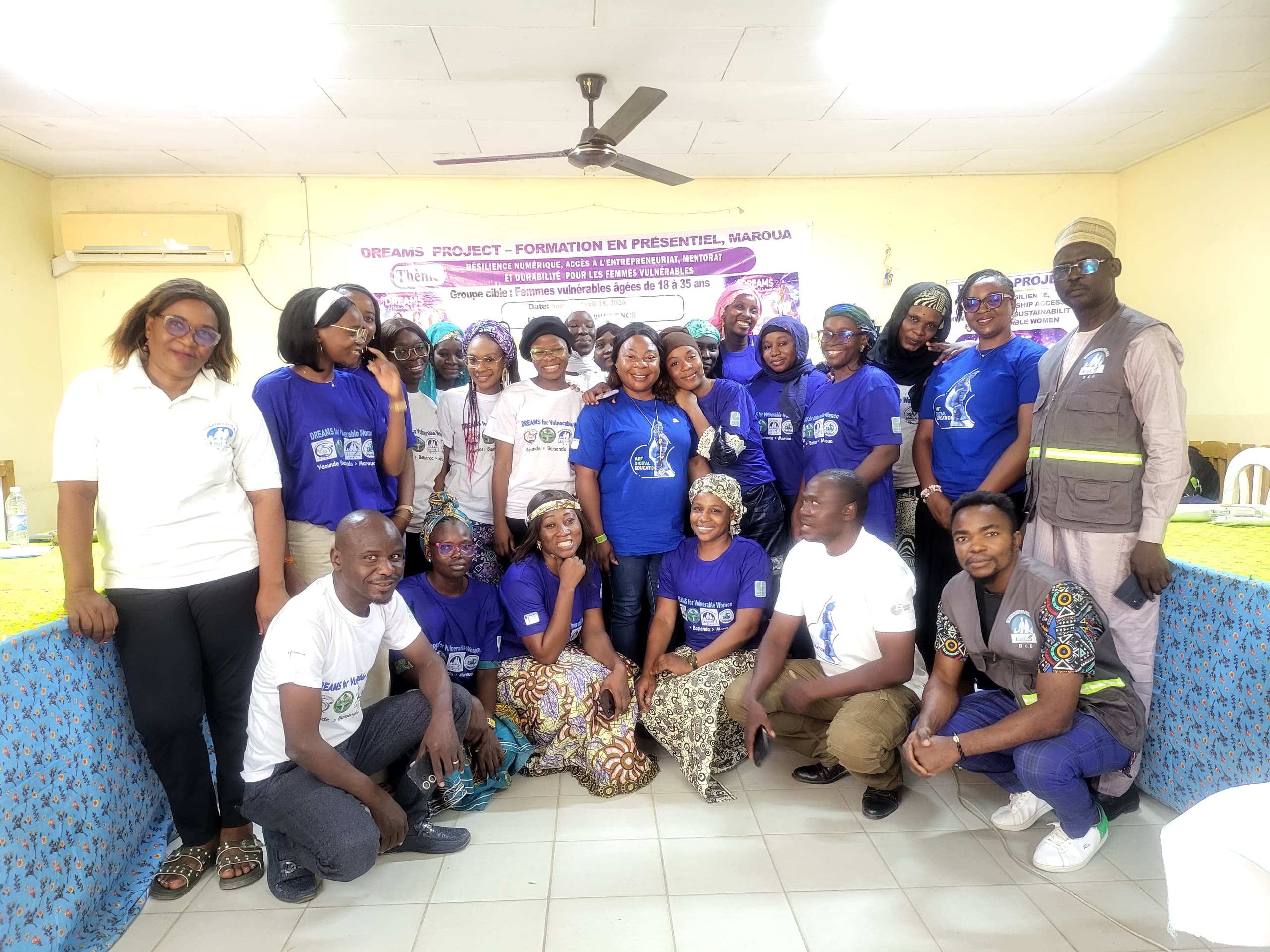
Dreams Maroua family photos 1
Facilitators were drawn from across the consortium for the Maroua session, bringing combined expertise across digital inclusion, community development, women's empowerment, and environmental and agricultural livelihoods. The breadth of that expertise is not a bureaucratic feature — it is a programme asset. When a participant in the group discussion raises a question that sits at the intersection of digital access and agricultural income generation, the FAPNGO facilitator is in the room. That depth of response is what single-organisation delivery cannot replicate.
What the session produced — documented outcomes
Four outcomes were documented across the Maroua cohort. Each represents a measurable shift in knowledge orientation, confidence, or social capacity — not anecdotal impressions, but observations grounded in facilitator assessment across the session arc.
Digital awareness
Participants developed increased understanding of digital resilience — what it means, why it matters, and how it connects to their economic lives in practical terms.
Entrepreneurial knowledge
Improved grasp of entrepreneurship concepts, with particular traction around opportunity identification and basic financial planning within their community context
Engagement quality
High levels of participation and active engagement throughout all five session components — a signal that the content was accessible, relevant, and held participants' genuine attention.
Challenge mapping
Participants collectively identified and articulated the major barriers limiting their digital and economic access — producing field intelligence that directly informs the next phase of implementation.
The fourth outcome deserves particular attention. Many programmes treat participant-identified challenges as problems to manage rather than data to use. The DREAM Project's facilitated group work was structured to surface these barriers explicitly — making challenge documentation a designed programme output rather than an unintended byproduct. That intelligence is now available to shape follow-up sessions, mentorship priorities, and future programming design.
Four recommendations with structural force
The programme's recommendations for future implementation are not incremental adjustments. Each one represents a structural shift in how the DREAM Project must be designed and resourced to deliver on its potential.
Hands-on digital training:
Practical device access must accompany theoretical digital literacy content. Future sessions require either on-site device provision or a structured community-device-access arrangement that participants can use between sessions.
Local language delivery:
Content must be delivered in the primary languages of each target community. For the Far North, this means Fulfuldé-medium facilitation at minimum, with multilingual materials that reflect the region's linguistic reality.
Extended workshop duration:
Multi-day formats are required to deliver all five content components at genuine depth. Single-day delivery compresses material that participants need time to absorb, question, and practise — especially in contexts with low baseline digital exposure.
Sustained mentorship and follow-up:
The mentorship component introduced in April must be delivered with consistency and accountability through to September. Follow-up sessions should be scheduled and resourced before the next workshop, not planned reactively after it.
Why this model warrants sustained investment
The DREAM Project in Maroua made a genuine start in one of the most structurally complex implementation environments in Cameroon. It reached women who are not easy to reach, delivered content that has direct economic relevance to their lives, and produced documentation rigorous enough to guide what comes next.
What it now requires is the resourcing to address its own named constraints — devices, language, time, and sustained mentorship follow-through. None of those are insurmountable. All of them require deliberate investment decisions from partners and funders who understand that the first session of a seven-month programme is not the evaluation point. It is the foundation.
SDG 1 — No Poverty
SDG 4 — Quality Education
SDG 5 — Gender Equality
SDG 8 — Decent Work & Economic Growth
SDG 9 — Industry & Innovation
For any partner or funder committed to women's digital inclusion and economic empowerment in Cameroon's most underserved regions, the DREAM Project in Maroua presents a clear and honest case: the methodology is sound, the consortium is functional, the challenges are named and solvable, and twenty women in the Far North are already more equipped than they were on 17 April. The question is not whether this work is worth doing. It is whether the sustained commitment exists to do it well.
Your content goes here. Edit or remove this text inline or in the module Content settings. You can also style every aspect of this content in the module Design settings and even apply custom CSS to this text in the module Advanced settings.