Inside UNIMAC's capacity building work in Buea, and why training the right people is the only peacebuilding model that scales.
April 8, 2026
REVACAM Office, Buea
Southwest Region, Cameroon
7 min read
Across Cameroon's most socially fractured regions, the dominant response to cultural conflict has been awareness — campaigns, declarations, goodwill. UNIMAC is pursuing a different answer: structured skill transfer, delivered to the people who are already shaping communities every day.
The gap between claiming peace and building it
Many organisations claim to promote peace. Very few train people to practise it. That distinction — between aspiration and operational capability — is where most well-intentioned programming quietly fails.
Cameroon's social tensions are not simply political. They are deeply cultural, shaped by long-standing patterns of inter-ethnic distance, uneven resource access, and the compound pressures of displacement in the Northwest and Far North regions. These dynamics cannot be resolved through slogans or one-off campaigns. They require sustained engagement with the individuals who hold daily influence in communities: teachers who shape how the next generation understands difference, and youth leaders who determine whether frustration becomes cohesion or conflict.
Cultural conflict is not fixed by raising awareness. It is fixed by equipping the people who influence communities every day with the tools to respond differently.
What happened in Buea
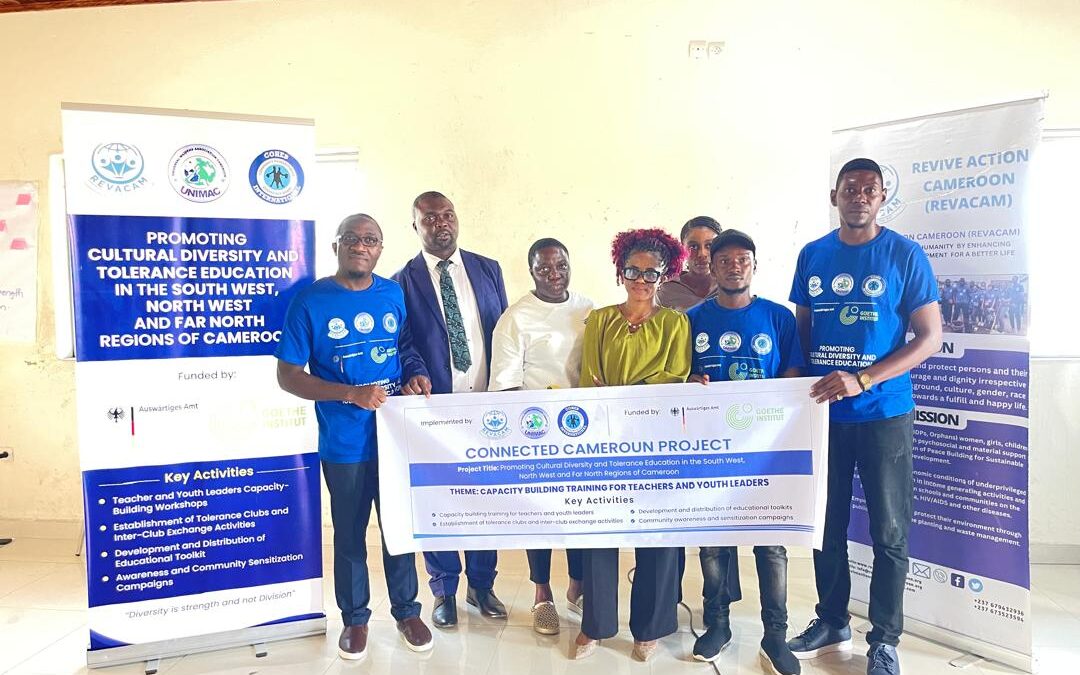
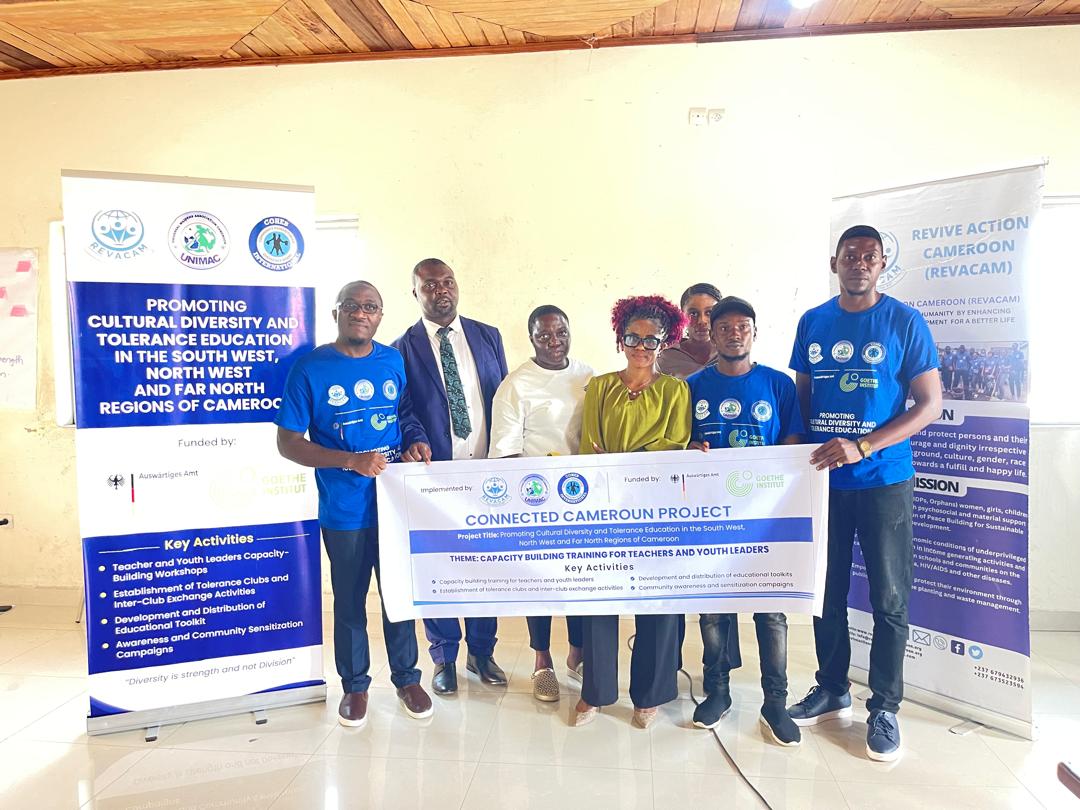
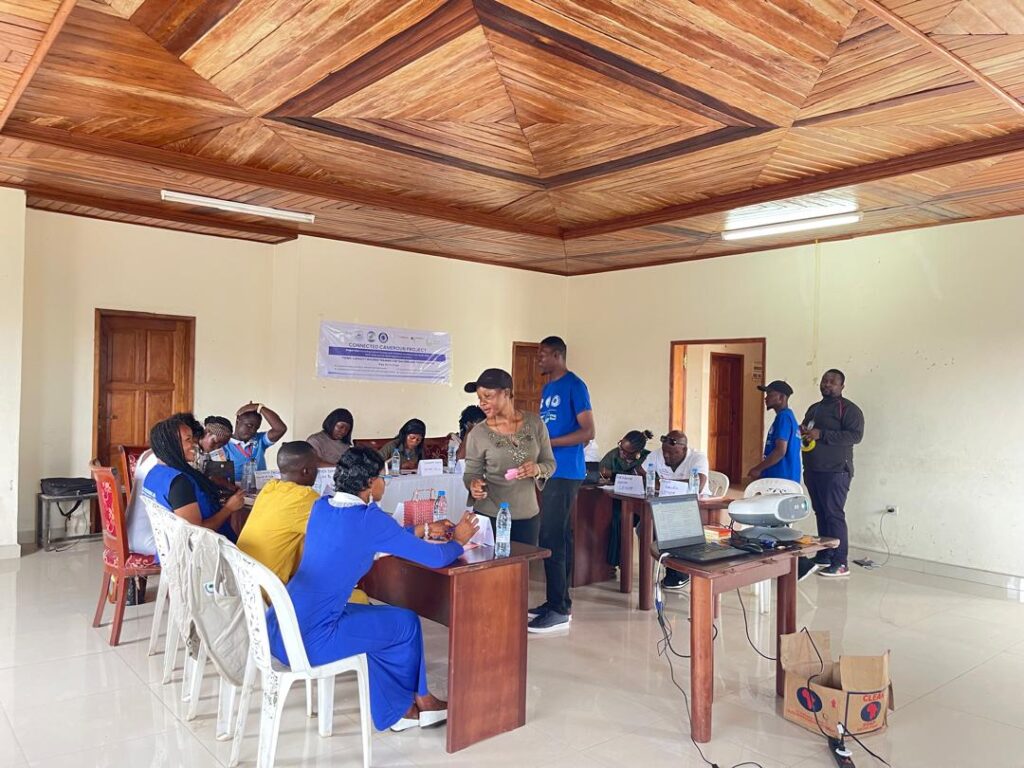
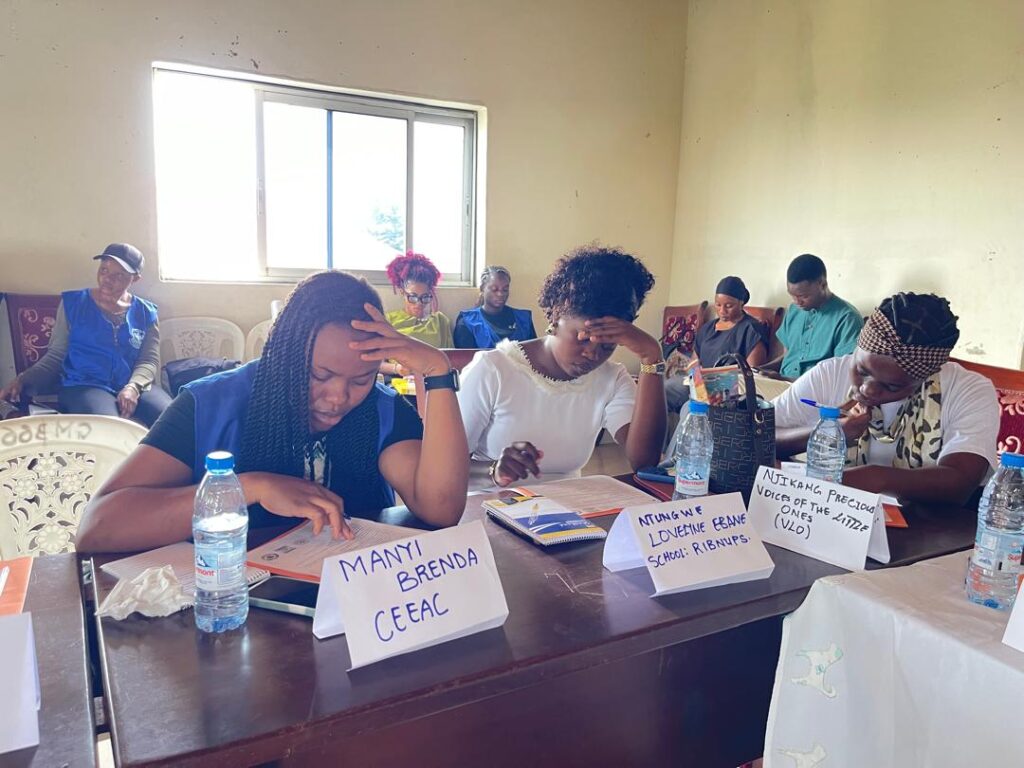
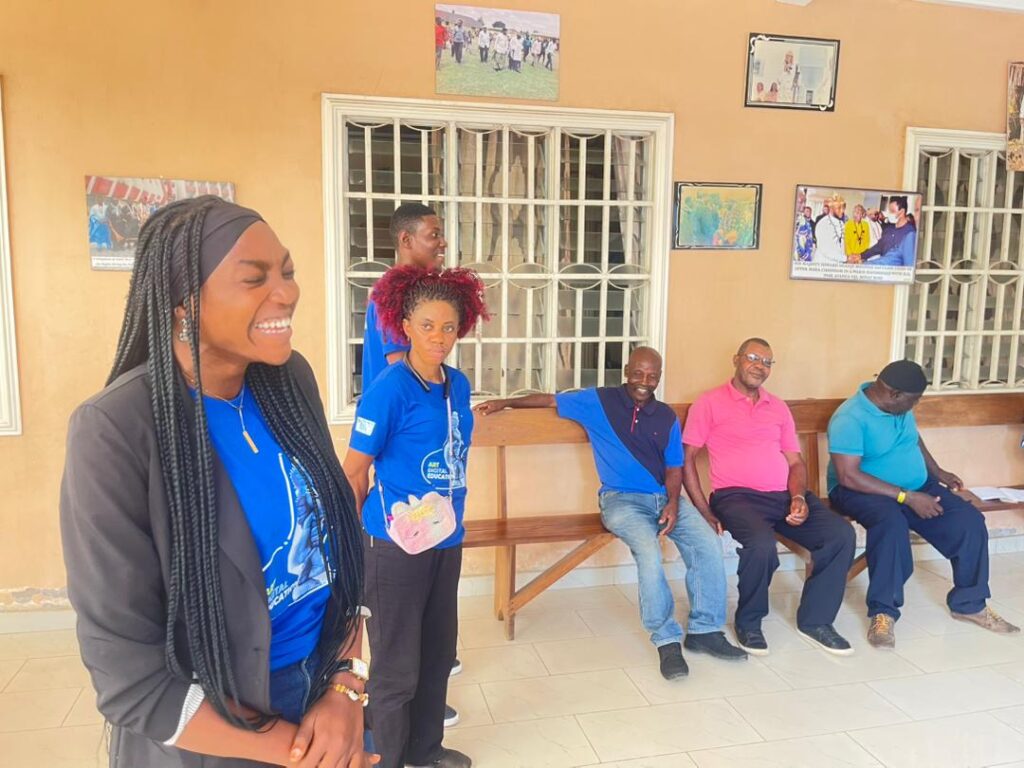
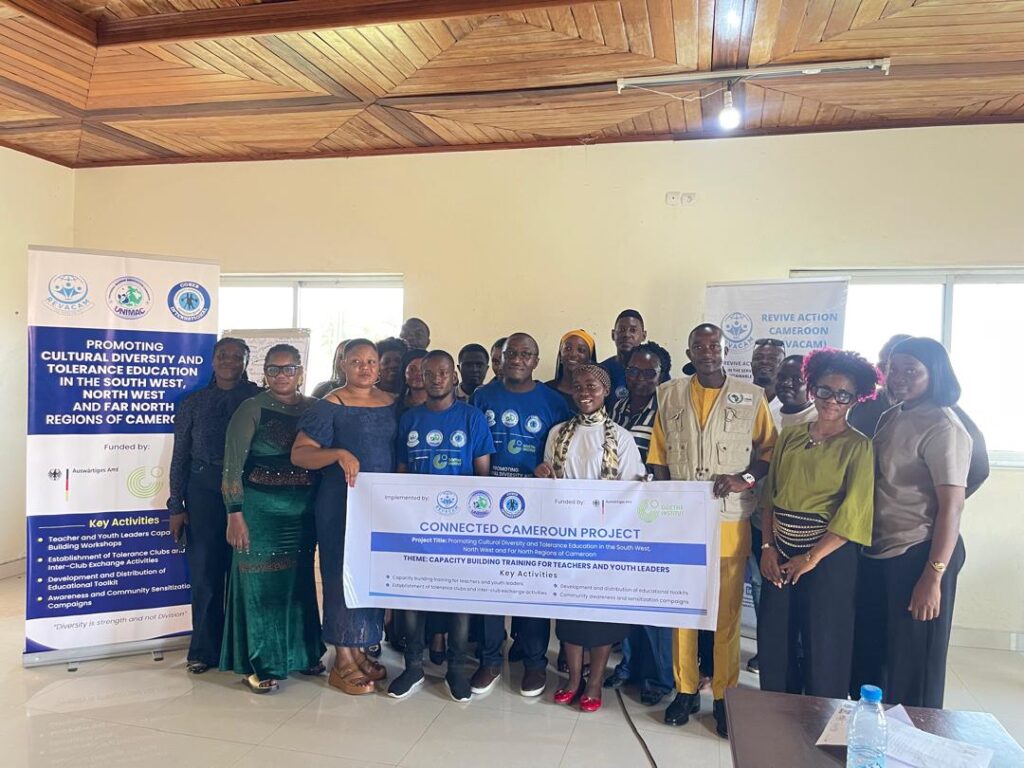
On Wednesday, 8 April 2026, a targeted capacity-building workshop was convened at the REVACAM office in Buea, Southwest Region. It was organised by REVACAM as lead implementing partner, in direct collaboration with UNIMAC and COHEB, as part of the broader project: Promoting Cultural Diversity and Tolerance Education in the Southwest, Northwest, and Far North Regions of Cameroon.
Date: Wednesday, 8 April 2026
Participants: ~20 teachers & Youth Leaders
UNIMAC Representation: Executive Director & Field Cordinator
VENUE REVACAM Office, Buea
REGION COVERAGE Southwest Region (Primary)
ORGANISER REVACAM, with UNIMAC & COHEB
The roughly 20 participants were not a general audience. They were practitioners already embedded in community structures — teachers and youth leaders whose daily work places them at the precise intersection where culture and conflict are either reproduced or interrupted. The decision to target this group specifically is itself a statement of strategic intent.
Four objectives, one coherent theory of change
The workshop was structured around four clearly defined objectives, each targeting a discrete capacity gap rather than a broad aspiration.
Deepen participants' understanding of cultural diversity and tolerance education — moving beyond surface familiarity toward applied knowledge.
Build the capacity of teachers and youth leaders as agents of peace and social cohesion within their communities.
Equip participants with practical tools for promoting inclusion and preventing conflict in real-world community settings.
Strengthen collaboration among implementing partners and local actors, building the relational infrastructure that sustains any initiative beyond its formal timeline.
UNIMAC's role: present at leadership level, not in the margins
UNIMAC's direct representation at both Executive Director and Field Coordinator level matters beyond protocol. When an organisation sends its senior leadership to an implementation session, it signals that the activity is central to its mandate — not an ancillary contribution, not a sub-grant footnote.
REVACAM (Lead Implementing Partner)
UNIMAC
COHEB
The three-organisation structure also reflects a principle that the most effective development programmes have learned through hard experience: no single actor has the community trust, sectoral expertise, and operational reach to deliver this kind of work alone. Multi-actor implementation is not a logistical convenience — it is a prerequisite for the kind of scale and legitimacy this programme requires.
What changed — and why it is measurable
The outcomes from the Buea workshop were documented across four dimensions. Taken together, they represent a movement from passive awareness toward active social agency — which is the only shift that produces durable community-level change.
COMPREHENSION
Improved understanding of cultural diversity and tolerance — grounded in practical frameworks, not abstract definitions.
AGENCY
Participants moved from observer status to active capacity: equipped to function as community change agents, not passive recipients of messaging.
COLLABORATION
Strengthened inter-organisational and inter-community ties among stakeholders — the relational foundation that any sustained initiative depends on.
MOTIVATION
A documented shift from awareness to action orientation — participants reported increased readiness to apply tools within their specific community contexts.
The last outcome deserves emphasis. Awareness without the motivation and capacity to act on it generates no social return. This workshop was specifically designed to close that gap — and the documented shift in participant orientation suggests it did.
The workshop as infrastructure, not endpoint
The April 8th session was not an outcome in itself. It was a building block in a longer sequence — a designed intervention within a model intended to repeat, refine, and scale. The recommendations produced at the close of the workshop reflect that framing directly.
Organise follow-up training sessions and structured mentorship to consolidate and extend the skills developed during the workshop.
Strengthen monitoring and ongoing support mechanisms to track participant-level application of peacebuilding tools in community settings.
Expand participation to a broader range of stakeholders across the Southwest, Northwest, and Far North regions.
Deepen collaboration among community actors, creating the cross-sectoral networks that make locally-led peacebuilding self-sustaining.
Each of these recommendations points toward the same logic: the real investment is not in a single workshop — it is in the repeatable model that a workshop validates. UNIMAC is not running events. It is constructing the scaffolding for a peacebuilding methodology that can be delivered consistently across three of Cameroon's most culturally and politically complex regions.
The strategic case for partners and funders
There is a category of social investment that generates activity without generating change. Conferences are held, reports are written, awareness is raised, and the underlying conditions that produced the problem remain structurally intact. Partners and funders who have been through enough programme cycles know this pattern well.
This programme occupies a different category. It targets practitioners, not general audiences. It delivers tools, not messaging. It documents outcomes, not activities. And it is designed explicitly for replication — which is the only criterion that distinguishes a programme worth scaling from one worth completing.
SDG 16 — Peace, Justice & Strong Institutions
SDG 4 — Quality Education
SDG 10 — Reduced Inequalities
Beyond SDG alignment, the programme addresses a gap that is harder to fund precisely because it is harder to make visible: the slow, cumulative work of building the human capacity for coexistence in communities where the default trajectory is fragmentation. That work does not generate dramatic before-and-after imagery. It generates teachers who respond differently to inter-ethnic conflict in a classroom. Youth leaders who channel frustration into dialogue rather than disruption. Communities that are incrementally more able to self-regulate tension before it escalates.
If the objective is measurable social return at community scale, this is the level of intervention it requires.
Peace is not accidental. It is trained, reinforced, and — when the model is right — sustained long after the programme that initiated it has ended.
For partnership enquiries, programme documentation, or information about the broader project in the Southwest, Northwest, and Far North regions, contact UNIMAC directly through official channels.